
Imagine plucking fresh basil or mint right from your kitchen windowsill. Indoor herb gardens bring vibrant flavour and greenery to UK homes, no matter the season. With the right setup, even tiny flats can nurture abundant herbs indoors. This guide from Epiclectic explains, step by step, how anyone can start, care for, and enjoy a thriving Indoor Herb Garden. Whether you’re a beginner or an experienced gardener, you’ll gain practical tips for every stage—from choosing herbs to creative planter ideas and lighting solutions. By the end, you’ll know exactly how to transform your windowsill or countertop into a productive, low-maintenance source of culinary delight.
To start an indoor herb garden in the UK, choose easy herbs, use well-draining containers, place them in a sunny spot or under grow lights, and water regularly.
Key Takeaways
- Anyone can grow fresh herbs indoors with a few simple steps.
- Best herbs for UK homes include basil, chives, parsley, and mint.
- Light is the most important factor for indoor herb success.
- There are creative planter options for every space and style.
- Regular care and the right herbs mean year-round harvests.
Why Trust This Guide?
Epiclectic provides practical, fact-checked advice tailored to real UK homes and gardeners:
- Editorially reviewed for accuracy
- Original and plagiarism-free
- Written for real readers, not search engines
- Regularly reviewed and updated
- Last reviewed: July 2026.
Indoor Herb Garden: The Complete UK Guide for Beginners and Enthusiasts
This article covers everything you need to know about starting and caring for an indoor herb garden in the UK, from choosing the best herbs to lighting tips, troubleshooting, and city-specific advice for homes in Leicester, London, and beyond.
What Is an Indoor Herb Garden? Essentials for UK Homes
An indoor herb garden is a collection of culinary or medicinal herb plants grown inside a home, commonly on a kitchen windowsill or countertop. The appeal is clear: you can snip leaves for cooking, enjoy fresh aromas, and brighten your living space, all without stepping outdoors. According to the Royal Horticultural Society (RHS), indoor herb gardens are especially popular in urban UK homes where outdoor space is limited.
Growing herbs inside is more than just convenient—it’s also practical for the UK climate, where unpredictable weather can make outdoor gardening tricky. Herbs such as basil, parsley, and chives can thrive indoors, providing a steady supply of fresh ingredients even in the depths of winter. Compared to supermarket herbs, home-grown varieties are often more flavourful and cost-effective over time.
To start, you’ll need a few essentials: pots with drainage holes, quality peat-free compost, and a bright spot near a window. Most UK kitchens can accommodate a small herb collection, whether on a windowsill, counter, or shelf. For those with limited sunlight, grow lights are a smart investment to ensure herbs get the 6–8 hours of light they need. With these basics in place, anyone can learn how to start a kitchen herb garden that fits their lifestyle and space.
What is the Royal Horticultural Society?
The Royal Horticultural Society (RHS) is the UK’s leading gardening charity, providing expert advice, research, and training for gardeners of all levels.
If you’re interested in broader home improvement ideas, Epiclectic’s Home & Living section offers inspiration for every room. For in-depth herb care advice, the RHS has excellent resources at rhs.org.uk.
Best Herbs to Grow Indoors in the UK
Not all herbs thrive equally indoors.
- Basil, parsley, and chives are the top three herbs grown indoors in the UK, according to the RHS (2023).
- Mint, thyme, and coriander are also excellent choices, each offering unique flavours and aromas.
- Low maintenance indoor herbs such as chives and mint require less frequent watering and are forgiving if you miss a day.
- For beginners, parsley and chives are especially resilient and adapt well to UK homes.
- Enthusiasts may enjoy experimenting with rosemary, sage, or even lemongrass, though these need more attention to light and humidity.
Choosing the best herbs to grow indoors UK-wide depends on your kitchen environment, how much light you have, and your cooking preferences. If space is tight, select compact or multi-use herbs that suit small space herb gardening UK homes often require.
| Herb | Ease of Care | Light Needed | Watering | Flavour Notes |
|---|---|---|---|---|
| Basil | Easy | High | Moderate | Sweet, peppery |
| Parsley | Very Easy | Medium | Moderate | Fresh, grassy |
| Chives | Very Easy | Medium | Low | Mild onion |
| Mint | Easy | Low-Medium | High | Cool, refreshing |
| Thyme | Easy | High | Low | Earthy, lemony |
For a practical example, if you want to start with just one or two pots, try parsley and chives. Both tolerate occasional neglect and will regrow quickly after cutting. In contrast, basil is more sensitive to temperature drops and needs a consistently warm, sunny spot—making it a good test for your indoor herb garden lighting UK setup.
Quick Tip: Start with herbs you use most in your kitchen. This ensures nothing goes to waste and you’ll enjoy the freshest flavours every day.
If you’re keen to expand your culinary repertoire, Epiclectic’s Food section explores creative recipes that make the most of home-grown herbs. For a deeper dive into herb varieties, Gardeners’ World offers detailed profiles and care advice.
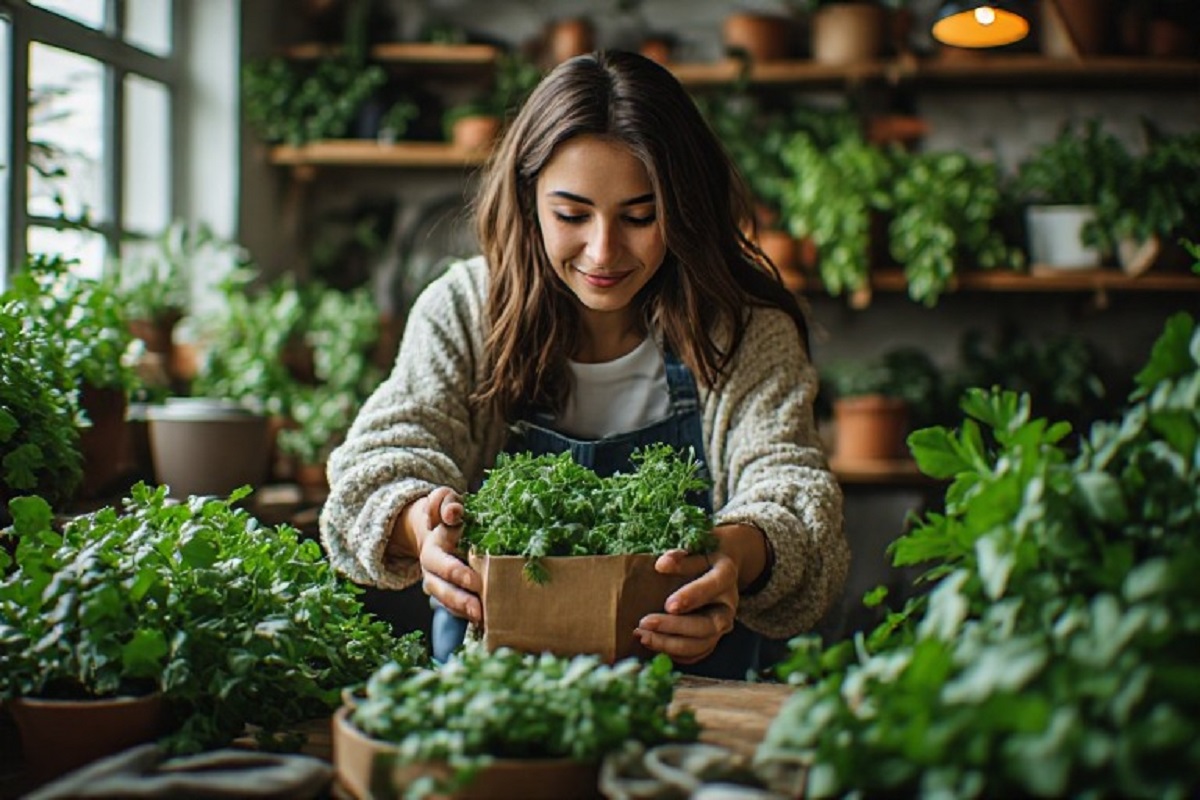
How to Start Your Indoor Herb Garden: Step-by-Step
| Step | Action | Why It Matters |
|---|---|---|
| 1 | Choose easy herbs (e.g., basil, parsley, chives) | Ensures high success rate, especially for beginners |
| 2 | Select pots with drainage holes | Prevents waterlogging and root rot |
| 3 | Fill with peat-free, multi-purpose compost | Provides nutrients and good structure for roots |
| 4 | Plant seeds or young plants at correct depth | Promotes strong germination and growth |
| 5 | Place in a bright spot (ideally south-facing window) | Maximises light exposure for healthy plants |
| 6 | Water when the top inch of soil feels dry | Prevents overwatering and fungal issues |
| 7 | Feed with liquid fertiliser every 2–4 weeks (optional) | Boosts growth and flavour, especially in small pots |
Setting up your indoor herb garden is straightforward, but a few details make a big difference. Always use containers with drainage holes—skipping this step is the most common cause of root rot. A worked example: If you plant basil in a 12cm pot with drainage, water every 3–4 days, and keep it near a south-facing window, you’ll see healthy growth within two weeks. By comparison, the same basil in a dark, unventilated corner may become leggy, pale, and prone to mould.
Most people think that more water means healthier herbs, but actually, overwatering is the fastest way to kill indoor herbs. Instead, check moisture by sticking your finger into the soil; only water when the top inch feels dry. For busy households, self-watering planters or hydroponics systems can automate this process and reduce maintenance.
Quick Tip: Rotate your pots every few days so all sides of your herbs receive even light. This prevents lopsided, leggy growth and ensures sturdy stems.
For more step-by-step gardening projects, visit Epiclectic’s Gardening section. The RHS also offers a full guide to indoor herb growing for UK homes.
Creative Indoor Herb Planter Ideas for Every Space
Imagine someone who lives in a compact London flat with only a narrow ledge above the sink. They want to enjoy kitchen countertop herbs but have almost no space for traditional pots. Creative planter ideas can transform even the smallest area into a thriving green corner.
- Hanging planters or wall-mounted racks maximise vertical space and keep herbs within easy reach.
- Self-watering planters are ideal for busy lifestyles, reducing the risk of both drought and overwatering.
- Repurposed containers—such as teacups, tin cans, or glass jars—add personality and support sustainability.
- Modular stacking systems let you grow multiple herbs in a single vertical column, perfect for small space herb gardening UK homes.
- Window-mounted troughs or suction-cup planters make the most of natural light for growing herbs on a windowsill UK kitchens often feature.
- Hydroponic kits offer a soil-free solution and are especially useful in homes with pets or allergies.
- For renters, lightweight and portable planters mean you can move your herbs to catch the best sun or take them with you when you move.
Quick Tip: Upcycle old mugs or jam jars as herb planters. Just add gravel at the bottom for drainage and drill a hole if possible.
Choosing the right planter is about more than looks—it affects drainage, root health, and how easy it is to care for your herbs. For more sustainable living ideas, Epiclectic’s Sustainability section has practical tips for repurposing household items. House Beautiful also showcases stylish and functional planter options.
Lighting for Indoor Herb Gardens: What UK Homes Need
Lighting is the single most important factor for indoor herb success. Most herbs require at least 6 hours of bright, indirect sunlight—ideally from a south- or west-facing window. In many UK homes, especially in winter or in north-facing flats, natural light is insufficient for healthy growth. This is where artificial lighting, such as LED grow lights, becomes essential.
Light is food for your herbs.
Natural sunlight is best, but if your kitchen lacks a sunny spot, affordable clip-on grow lights or full-spectrum LED panels can provide the boost your plants need. A common misconception is that any lamp will do—actually, only lights designed for plant growth emit the right wavelengths for photosynthesis. For example, a standard desk lamp may look bright but won’t support lush, green growth.
- South-facing windowsills are ideal for most herbs.
- East-facing windows can work if you supplement with artificial light.
- Grow lights should be placed 15–30cm above the plants and run for 8–12 hours daily.
- Rotate pots regularly to ensure even exposure and prevent leggy growth.
Quick Tip: Set a timer for your grow lights to mimic natural day length and avoid accidental overexposure.
What are grow lights?
Grow lights are artificial lights specifically designed to provide the right spectrum of light for plant growth indoors, especially when natural sunlight is limited.
For more home improvement ideas, Epiclectic’s Home & Living section covers lighting and layout tips. The RHS has a detailed guide to lighting for indoor plants in the UK climate.
Essential UK Indoor Gardening Tips for Healthy Herbs
Consistent care is the secret to healthy herbs indoors.
Watering routines are crucial—herbs generally prefer soil that is moist but never soggy. In the UK, central heating can dry out indoor air, so check your herbs daily, especially in winter. A good rule is to water when the top inch of soil feels dry, using pots with drainage to prevent root rot. Feeding with a balanced liquid fertiliser every few weeks keeps herbs vigorous, particularly in small containers where nutrients are quickly depleted.
Temperature and humidity also matter. Most indoor herbs thrive at 18–22°C (65–72°F) and appreciate a bit of humidity. If your home is very dry, misting the leaves or placing a shallow tray of water nearby can help. Basil, in particular, dislikes cold drafts and sudden temperature changes—so keep it away from open windows in winter.
Common problems include leggy, pale, or yellowing leaves. These are usually signs of insufficient light, overwatering, or lack of nutrients. A practical analogy: think of herbs as Goldilocks plants—they want conditions that are “just right.” Too much or too little of anything quickly shows in their appearance. If you spot issues, adjust light, water, or feeding before problems become severe.
Quick Tip: For low maintenance indoor herbs, try chives or mint. They tolerate occasional neglect and bounce back quickly after trimming.
For further reading on plant health, Epiclectic’s Health section explores the wellbeing benefits of indoor greenery. Thrive offers expert advice at thrive.org.uk.
Troubleshooting & FAQs: Keeping Your Indoor Herb Garden Thriving
What if your herbs look sad, droopy, or refuse to grow? Quick troubleshooting can often revive struggling plants before it’s too late.
- Yellow leaves often mean overwatering or poor drainage. Let the soil dry out and check for blocked drainage holes.
- Leggy or pale herbs signal insufficient light. Move to a brighter spot or add a grow light.
- Drooping or wilting can be caused by either too much or too little water—feel the soil to check.
- Pests like aphids or fungus gnats are rare indoors but can be managed by removing affected leaves and improving airflow.
- If roots fill the pot or growth stalls, it’s time to re-pot into a larger container with fresh compost.
| Problem | Likely Cause | Solution |
|---|---|---|
| Yellow leaves | Overwatering/poor drainage | Let soil dry, check drainage |
| Leggy stems | Insufficient light | Move to brighter spot/add grow light |
| Slow growth | Lack of nutrients | Add liquid fertiliser |
| Drooping leaves | Watering issue | Check soil, adjust watering |
| Fungal spots | High humidity/poor airflow | Increase ventilation, remove affected leaves |
| Pests | Occasional indoor infestation | Remove pests, improve airflow, check new plants |
| Roots circling pot | Pot-bound plant | Re-pot to larger container |
Quick Tip: If in doubt, less water is safer than too much. Most herbs recover from dryness faster than from soggy roots.
For more wellbeing advice, Epiclectic’s Wellness section explores the mental health benefits of indoor plants. The RHS provides pest and disease identification at rhs.org.uk.
Local Indoor Herb Gardening in Leicester, London, and Beyond
| City/Region | Lighting Tips | Humidity Advice | Local Resources |
|---|---|---|---|
| Leicester | South-facing windows best; supplement in winter | Central heating dries air—mist leaves | Leicester Allotment Society, local garden centres |
| London | High-rise flats may need grow lights | Use pebble trays for humidity | Capital Growth, city gardening groups |
| Birmingham | Frequent cloud cover—choose shade-tolerant herbs | Increase airflow to prevent fungal issues | Birmingham Botanical Gardens, local seed swaps |
| Manchester | North-facing windows common—use LED grow lights | Keep away from drafty windows | Manchester Urban Gardening Club |
| Nottingham | Mix of sunlight—rotate pots often | Monitor for sudden temperature changes | Nottingham Organic Gardeners |
| East Midlands | Varied—adapt to your home’s microclimate | Group herbs with similar needs | East Midlands Gardening Network |
Adapting your herb setup to local conditions is key. For example, a flat in Manchester with limited sun will benefit from a simple LED grow light, while homes in Leicester may only need to mist plants during dry winter months. Local gardening groups are a valuable source of advice and often share seeds, compost, and tips tailored to your area. If you’re looking for a local indoor herb garden near me or want to connect with fellow enthusiasts, join a city-based gardening group or visit your nearest garden centre.
For more regional gardening advice, Epiclectic’s Gardening section covers city-specific tips. The RHS has a directory of groups at rhs.org.uk.
Indoor Herb Gardening: Key UK Statistics
- Over 23% of UK households now grow herbs indoors (Royal Horticultural Society, 2024).
- Basil, parsley, and chives are the top three herbs grown indoors in the UK (RHS, 2023).
- Houseplants—including herbs—improve indoor air quality by up to 25% (NHS, 2024).
Takeaway: The popularity of indoor herb gardening is rising fast in the UK, with proven benefits for health and lifestyle.
Common Mistakes to Avoid
- Overwatering herbs: This leads to root rot; always check soil moisture before watering.
- Insufficient light: Herbs need at least 6 hours of bright light—supplement with grow lights if needed.
- Planting too many herbs in one pot: This causes competition for nutrients and stunted growth; use separate pots for best results.
What are self-watering planters?
Self-watering planters are containers with built-in reservoirs that automatically supply water to plant roots, reducing the risk of over- or under-watering.
What is hydroponics?
Hydroponics is a method of growing plants without soil, using nutrient-rich water solutions—ideal for indoor gardening in small spaces.
Frequently Asked Questions
What is the best location for an indoor herb garden in a UK home?
A south or west-facing windowsill is ideal for most herbs, but east-facing can work with extra light.
Which herbs grow well indoors in the UK climate?
Basil, parsley, chives, mint, and thyme are among the top herbs suited to UK indoor conditions.
How do I prevent indoor herbs from becoming leggy?
Ensure they have enough light and rotate pots regularly for even growth.
What is the best way to water indoor herbs?
Water when the top inch of soil is dry; avoid soggy soil and use pots with drainage holes.
Can you grow basil indoors in the UK?
Yes—basil thrives indoors with warmth, good light, and regular watering.
Are there indoor herb garden kits available in the UK?
Yes, a wide range of kits is available, from basic seed sets to advanced hydroponic systems.
Local Indoor Herb Gardening: Tips for Leicester, London, Birmingham, Manchester, Nottingham, and the East Midlands
Leicester residents searching for “indoor herb garden near me” can find plenty of community allotments and local garden centres offering advice and supplies. In London, many flats have limited space or sunlight, so grow lights and compact planters are especially useful. Birmingham’s variable cloud cover means shade-tolerant herbs like mint and parsley are good options, while Manchester’s north-facing kitchens benefit from LED lighting and careful placement away from drafts. Nottingham and the wider East Midlands have a thriving gardening community, with local groups sharing seeds and tips for adapting to each home’s unique microclimate. No matter your city, connecting with local indoor herb garden UK groups can help you find the right setup for your environment.
Next Steps
- Explore more detailed plant care and sustainability advice in Epiclectic’s Sustainability and Gardening sections.
- Experiment with different herb varieties to discover what grows best in your kitchen.
- Share your progress and tips with local gardening groups or friends to expand your knowledge and enjoyment.



Editorial Insight
According to Epiclectic’s editorial team: “The key to a successful indoor herb garden is balancing light, water, and airflow. Many UK homes struggle with low winter light—grow lights can make all the difference for lush, flavourful herbs.”