
Tax year: 2026/27 | Published: 24 September 2026 | Last reviewed: September 2026 | Written by the Epiclectic Editorial Team | Tax sections reviewed by Shamayun Chowdhury
What Is a Business? The Everyday, Legal and Tax Answers (UK, 2026/27)
Quick answer
In the UK, a business is an activity carried on regularly and in an organised way with a view to profit, by selling goods or services. There is no single legal definition. What creates obligations is HMRC’s trading test, and if you are trading and your gross income passes £1,000 in a tax year, you must tell HMRC.
Why trust this guide
- UK rules, not general theory. Search results for this question mix American articles with textbook definitions. Everything here reflects UK law and HMRC practice.
- Sourced to HMRC. The trading test, the £1,000 threshold and the worked examples come from HMRC guidance and its own campaign material, checked in September 2026.
- Accountant review. The tax sections were reviewed by a practising UK accountant.
- Obligations, not workarounds. This guide explains what you must do. It does not suggest ways to stay under thresholds.
1. Three ways to define a business
The word does a lot of work in English. It describes a company, an activity, a person’s trade, and even the amount of trade being done. That is fine in conversation, but it causes problems when someone needs to know whether their own activity counts.
It helps to separate three meanings, because only one of them creates legal obligations.
EVERYDAY MEANING
An organised activity that sells something
Selling goods or services to customers, repeatedly, with the aim of making money. This is what most people mean, and it needs no paperwork to be true.
LEGAL MEANING
Depends on the law being applied
There is no single statutory definition covering everything. Different areas of law define it for their own purposes, and the Partnership Act 1890 treats “business” as including every trade, occupation or profession.
TAX MEANING · THE ONE THAT BITES
Are you trading?
HMRC asks whether your activity amounts to trading, judged against a set of tests developed by the courts. If it does, tax obligations follow whether or not you call yourself a business.
That third definition is where people get caught out. You do not become a business by registering, naming yourself or printing cards. You become one by doing the activity, and the paperwork follows.
One related question worth separating: small business is a different label again, based on turnover and employee numbers rather than on whether you are in business at all. Our guide to what counts as a small business covers those thresholds.
2. What a business is for: purpose and features
What is the purpose of a business? The core purpose of most businesses is to create something people will pay for, and to sell it for more than it costs to produce, generating profit for the owners. Businesses also serve other purposes: providing employment, meeting a need in a community, and in some cases pursuing a social or charitable aim alongside trading.
Strip away the variety and most businesses share the same handful of features:
| Feature | What it means in practice |
|---|---|
| Something to sell | Goods, services or both. A bakery sells goods; a plumber sells a service; a café sells both |
| Customers | Someone willing to pay. Without this you have a project, not a business |
| Regularity | Activity repeated over time rather than a one-off sale |
| Organisation | Some system behind it: pricing, records, a way of reaching customers |
| Risk | The owner can lose money. That risk is why they keep the profit |
| Profit motive | Usually present, but not essential in every legal context. Some organisations trade without seeking profit for owners |
Goods and services
Goods are physical products a customer takes away: bread, candles, car parts. Services are work performed for the customer: haircuts, repairs, accountancy, cleaning. Many businesses sell both, and the distinction matters later for VAT and for how you price your time.
Profit and not-for-profit
Businesses are usually run to generate profit for their owners. Some organisations trade in much the same way but exist for another purpose, reinvesting surpluses into a social or community aim. They still sell things, still employ people and still keep accounts, which is why Section 5 looks at charities and social enterprises separately.
Editor’s note: if you came here for a definition to use in an assignment or a plan, the section above answers it. If you came here because you are selling something and want to know whether you have crossed a line, the sections that follow are the ones that matter.
3. The legal meaning: structures, not one entity
People often talk about “registering a business” as though a business were a single kind of legal thing you sign up for. It is not. In UK law, what you register depends on the structure you choose, and one of the options involves no business registration at all.
Sole trader
You and the business are the same person in law. There is no separate entity to create.
What you register: yourself, with HMRC, for Self Assessment. Nothing goes to Companies House.
Partnership
Two or more people carrying on a business together and sharing the profits.
What you register: the partnership and each partner with HMRC. Limited liability partnerships also register at Companies House.
Limited company
A separate legal person that owns its own assets, owes its own debts and files its own accounts.
What you register: the company at Companies House, then with HMRC for Corporation Tax.
Two consequences follow, and they explain most of the confusion around this question:
- A sole trader is a business. Being unregistered at Companies House does not mean you are not in business. Millions of UK businesses are sole traders with no company behind them.
- “My business name isn’t registered” proves nothing either way. Sole traders can trade under a name without registering it anywhere, subject to rules on what the name can contain.
Choosing between the structures is a separate decision, covered in our guide to business structures in the UK. The important point here is that none of these choices decides whether you are in business. That is settled by the next section.
4. The tax meaning: HMRC’s trading test
Sections 4 to 10 were reviewed for technical accuracy by Shamayun Chowdhury, Senior Accountant at Major Accountancy, Leicester. Figures apply to the 2026/27 tax year.
For tax, the question is not whether you feel like a business owner. It is whether your activity amounts to trading. Courts have wrestled with that question for decades, and the tests they developed are known as the badges of trade. HMRC sets them out in its own manuals and applies them when deciding whether income should have been declared.
There are nine, and no single one settles it. HMRC looks at the overall picture.
| Badge | The question to ask yourself | Example pointing towards trading |
|---|---|---|
| 1. Profit-seeking motive | Did you set out to make money from this? | You price items to cover costs and leave a margin |
| 2. Number of transactions | Is this happening repeatedly? | You make dozens of sales a month rather than one a year |
| 3. Nature of what you sell | Is it something people buy for use, or something bought to resell? | Stock you have no personal use for, bought in quantity |
| 4. Similar transactions elsewhere | Do you already trade in this area, or do something similar? | You run a related business or have sold in this way before |
| 5. Changes you make to it | Do you improve, repair or repackage it to sell it better? | You restore furniture or make items from materials you buy |
| 6. How the sale is carried out | Are you selling in a business-like way? | Listings, a shop page, advertising, market stalls, invoicing |
| 7. Source of finance | Did you borrow, expecting sales to repay it? | You used credit to buy stock or equipment |
| 8. Time between buying and selling | How quickly does it move on? | Bought and resold within weeks, rather than owned for years |
| 9. How you acquired it | Did you buy it deliberately, or come by it another way? | Deliberately sourced to sell, rather than inherited or gifted |
Three points people get wrong
There is no minimum turnover
Nothing in the trading test depends on size. A small activity can be a trade, and a large one might not be. The £1,000 figure people quote is an allowance, not a definition, as Section 8 explains.
Losing money does not exempt you
An activity run in a trading way can still be trading even if it makes a loss. Equally, a genuinely non-profitable hobby is not a trade, and you cannot claim tax relief for its losses.
Calling it something else changes nothing
“It’s just a hobby”, “it’s only pocket money” and “I never registered” are descriptions, not defences. The badges look at what you actually do.
When does a hobby become a business? A hobby becomes a business when your activity starts to look like trading: you buy or make things specifically to sell, you sell repeatedly, you aim to make a profit, and you go about it in an organised, business-like way. HMRC judges this using the badges of trade rather than any single income figure.
5. Charities, social enterprises and landlords
Three situations sit awkwardly against the everyday definition, and each trips people up for a different reason.
Charities and social enterprises
A charity shop sells goods, employs staff, pays suppliers and keeps accounts. In everyday terms it is obviously doing business. What differs is where any surplus goes: into the organisation’s purpose rather than to owners. Social enterprises and community interest companies work on the same principle, trading commercially while committing their profits to a social aim.
So “is a charity a business?” has two answers. In the sense of trading activity, often yes. In the sense of being run for the owners’ profit, no. Their tax and reporting obligations follow a different set of rules from an ordinary trading business, which is why the rest of this guide does not apply to them without further advice.
Landlords and property income
Renting out property is usually not trading. It is treated as property income, taxed under its own rules, which is why a landlord is not automatically “running a business” in the way a shopkeeper is. Two practical points follow:
- There is a separate £1,000 property allowance, which works alongside, not instead of, the trading allowance. Income from renting and income from trading are counted separately.
- Letting a furnished room in your own home falls under the Rent a Room scheme, with its own threshold of £7,500 a year.
- Services can change the picture. Where you provide substantial services alongside accommodation, such as running a guest house with meals and daily cleaning, the activity can amount to a trade. Take advice if you are close to that line.
Common mix-up: people assume the £1,000 trading allowance covers rental income too. It does not. They are two separate allowances for two separate types of income, and you can qualify for one without the other.
6. Employed, self-employed, or in business?
Plenty of people earning money outside a payslip are unsure which category they fall into. The label matters because it decides who handles tax, what rights you have, and whether you need to register with HMRC at all.
| Question | Points towards employment | Points towards being in business |
|---|---|---|
| Who decides how the work is done? | Someone tells you what to do, when and how | You decide your own methods and hours |
| Can someone else do it for you? | You must turn up personally | You could send a substitute or subcontract |
| Who provides the tools? | The organisation does | You buy your own equipment and materials |
| Who carries the risk? | You are paid whether or not the work is profitable | You can lose money, and fix mistakes at your own cost |
| How many customers? | One employer | Several clients, or you are free to take more |
Two things worth knowing. First, the label is not yours to choose freely: employment status follows the reality of the arrangement, not what a contract calls it. Second, you can be both. Running a side business while employed is entirely normal, and does not change your employment status in the day job. HMRC publishes an online tool for checking employment status where the position is genuinely unclear.
7. Hobby, side hustle or business?
Most people arriving at this question are somewhere between a hobby and a business. The table below applies the badges from Section 4 to situations people actually describe.
| What you’re doing | Likely position | Why |
|---|---|---|
| Clearing out your wardrobe and selling old clothes online | Not trading | You are selling your own possessions, not items acquired to sell on |
| Buying bundles of clothing from charity shops and reselling them individually | Trading | You buy specifically to sell at a profit, repeatedly and in an organised way |
| Making candles as a hobby, occasionally giving them away | Not trading | No sales and no profit motive |
| Making the same candles and selling them at markets and online | Trading | You make goods to sell, price them for profit and sell in a business-like way |
| Selling one inherited item of value | Usually not trading | One transaction, not acquired to sell. Capital gains rules may still apply |
| Posting videos and receiving payments or free products from brands | Trading | You supply a service for reward, and the reward includes non-cash items |
| Doing occasional paid favours, such as repairs for neighbours | Depends | Once or twice for cost is different from a regular, priced, advertised service |
These are general illustrations, not rulings. Where your situation sits close to a line, take advice or check HMRC’s guidance for your activity.
8. The £1,000 rule and the £3,000 myth
How much can I earn before telling HMRC? If you are trading, you can earn up to £1,000 of gross income in a tax year under the trading allowance without telling HMRC. Once your gross trading income passes £1,000, you must register for Self Assessment, even if you made no profit after expenses.
Three details that change the answer
- It is gross income, not profit. The £1,000 applies to what comes in before you deduct any costs. Someone with £1,400 of sales and £600 of materials has passed the threshold, even though the profit was £800.
- It covers all your trading activity together. If you sell on two platforms and do a bit of freelance work, add it all up. Three side activities of £400 each mean £1,200, which is over the line.
- Non-cash rewards count. HMRC’s own guidance for content creators gives the example of someone paid £700 for posts, sent £300 worth of gifted products they kept, and earning £200 from adverts. That is £1,200 of income, and it must be reported.
The £3,000 figure people keep repeating
The myth: “You don’t need to do anything until you earn £3,000.”
The reality: HMRC has addressed this directly. The £1,000 threshold still applies. The £3,000 figure refers to a planned, simpler online reporting tool, expected by 2029, which would let people earning between £1,000 and £3,000 from side income report it without filing a full Self Assessment return. Until that exists, the obligation and the process are unchanged.
What platforms tell HMRC
Since January 2024, digital platforms have reported seller information to HMRC under international rules agreed through the OECD. That covers marketplaces and services including second-hand selling, handmade goods, short-term accommodation and delivery or taxi work. Reporting is not the same as taxing: a person selling their own old possessions has nothing to declare regardless of what the platform reports. What it does mean is that undeclared trading income is far easier for HMRC to spot than it used to be.
If you are below £1,000, you have nothing to report, but keeping simple records of what you sold and what it cost is worth the few minutes it takes, in case you are ever asked.
9. What to do when it becomes a business
If the last few sections have told you that you are trading, the steps below put you straight. None of them is complicated, and doing them late is far more expensive than doing them now.
Register with HMRC by 5 October
The deadline is 5 October following the end of the tax year in which you started trading. So if you began trading in, say, November 2026, which falls in the 2026/27 tax year ending 5 April 2027, you register by 5 October 2027. Registering earlier is fine and often simpler.
Start keeping records properly
Every sale, every cost, every receipt, with dates. This is the single habit that decides whether your first tax return takes an hour or a weekend, and it matters more once digital record-keeping applies to you.
Separate the money
A sole trader is not legally required to have a business bank account, but mixing business and personal transactions in one account makes bookkeeping painful and mistakes likely. A separate account, even a basic one, pays for itself in saved time.
Decide your structure
Most people start as sole traders and review later. Section 11 covers when a company is worth considering, and our guide to registering your business walks through the process for each option.
Set money aside for tax
Nobody deducts it for you. Putting a fixed percentage of every payment into a separate account from the first sale prevents the most common shock: a January bill covering income you spent months ago.
Check what else your activity needs
Some trades need licences, registration with a council, or specific insurance. Food, childcare, taxi work, beauty treatments and anything involving other people’s property are common examples.
What if you should have registered earlier?
This is more common than people think, and it is fixable. If you have been trading above the threshold without telling HMRC, the position is straightforward: you have a duty to notify HMRC that you have income to declare, and the sooner you do it the better the outcome usually is. Coming forward voluntarily is treated more favourably than being found.
Penalties depend on the circumstances and on how long the income went undeclared, and HMRC can go back a number of years where income was not reported. If you are in this position and the amounts are significant or go back more than a year or two, speak to an accountant before contacting HMRC, so that the disclosure is made properly the first time.
10. What changes once you’re in business
Being in business brings a set of obligations that arrive at different points. Here is the sequence most sole traders meet them in.
| Obligation | When it applies | What it involves |
|---|---|---|
| Self Assessment | Once trading income passes £1,000 gross | Register, then file a return each year reporting income and expenses |
| Income Tax and National Insurance | On profits above your allowances | Paid through Self Assessment. Your other income counts too, so a side business on top of a salary is taxed at your overall rate |
| Making Tax Digital for Income Tax | Qualifying income above £50,000 since April 2026; £30,000 from April 2027; £20,000 from April 2028 | Digital records and quarterly updates using compatible software |
| VAT | Taxable turnover above £90,000 in any rolling 12 months | Register, charge VAT, file returns. You can register voluntarily below the threshold |
| Insurance | Employers’ liability is compulsory once you employ anyone | Other cover depends on what you do and who you deal with |
| Data protection | If you hold customer data | Handle it lawfully, and pay the data protection fee unless exempt |
If you live in Scotland: the trading test and the £1,000 allowance are UK-wide, but income tax on your profits follows Scottish rates and bands, which differ from the rest of the UK. Our guide to starting a business in Scotland sets out the 2026/27 bands and what else changes.
11. Do I need a limited company?
Is a sole trader a business? Yes. A sole trader is a business, even though there is no separate legal entity and nothing is registered at Companies House. You and the business are the same in law, which means you keep the profits after tax and are personally responsible for its debts.
Most people starting out do not need a company. A sole trader set-up is quicker, cheaper to run and far less administrative, and you can incorporate later if the business grows into it. A company starts to make sense when:
- You want the protection of a separate legal entity, because the work carries real financial risk
- You are taking on investors or co-owners with different shares
- Clients or contracts require it, which happens in some sectors
- Profits are large enough, and retained in the business, for the tax comparison to favour it
The tax case for incorporating is weaker than it was, because dividend tax rates rose again in April 2026. Run your own numbers rather than following general advice, and see our guide to business structures in the UK for the full comparison.
12. Common misunderstandings
- “It’s not a business until I register it.” The opposite is true. You register because you are already trading.
- “I only made a small profit, so it doesn’t count.” The threshold is £1,000 of gross income, before expenses, and there is no minimum size for trading itself.
- “I have a full-time job, so this is just extra.” Side income is still taxable, and your employment income affects the rate you pay on it.
- “It was paid in gifts, not money.” Non-cash rewards count as income at their value.
- “The platform handles my tax.” Platforms report seller data to HMRC. They do not calculate or pay your tax.
- “I’m a landlord, so the £1,000 trading allowance covers me.” Property income has its own separate allowance.
- “I made a loss, so there’s nothing to report.” A loss-making activity can still be trading, and losses may be worth reporting.
- “I’ll sort it out when it gets bigger.” The registration deadline runs from when you started, not from when the business feels serious.
13. Case study: a craft seller crossing the line
This is an illustrative scenario created for this guide. It is not a real person, and the figures are simplified examples.
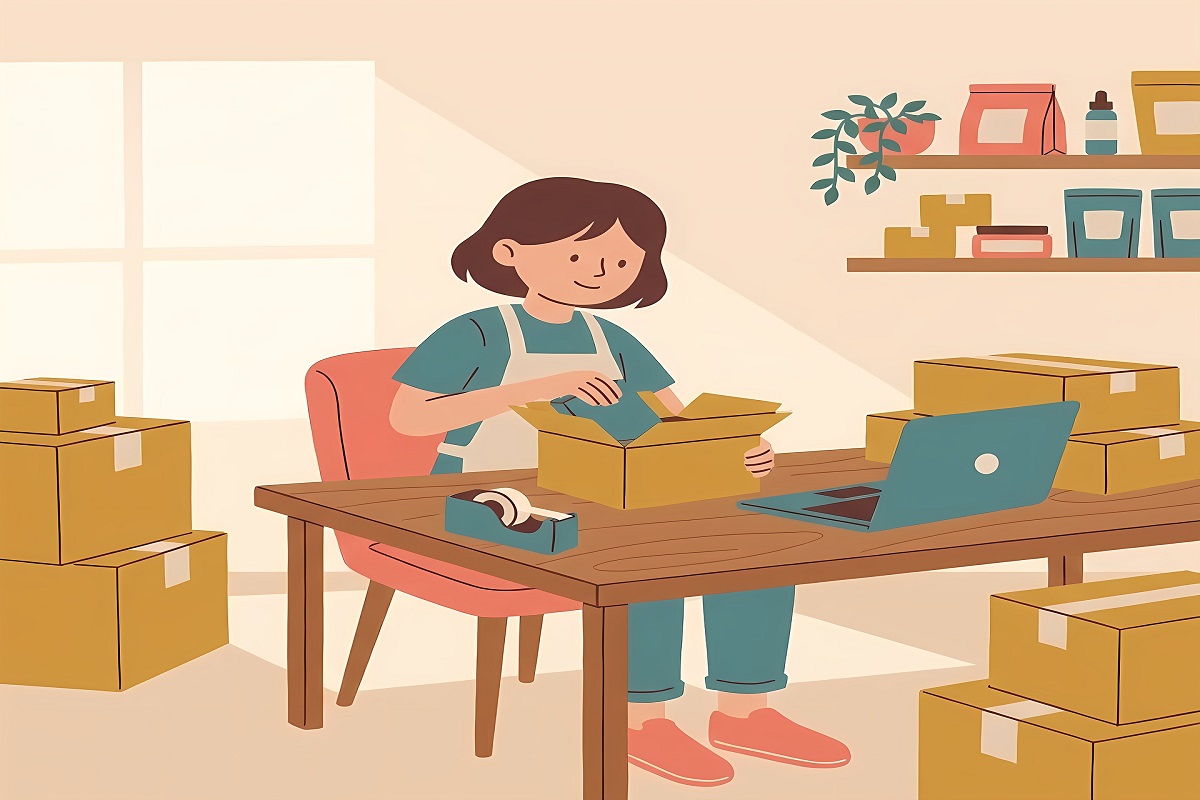
Year one: clearly a hobby. A teacher makes ceramics at a weekend class. She gives most pieces away and sells three to friends for roughly what the materials cost, taking about £90 across the year. No profit motive, no organised selling, nothing to report.
Year two: the picture changes. She buys clay and glazes in bulk, opens an online shop, prices pieces to cover materials and her time, and takes a stall at two Christmas markets. Sales reach £1,450 before expenses of £700.
Applying the badges: she buys materials specifically to make items for sale, sells repeatedly, prices for profit, and sells in a business-like way through a shop and markets. That is trading, and it does not matter that her profit was only £750.
What she does: her gross income is £1,450, above the £1,000 trading allowance, so she registers for Self Assessment before the 5 October deadline in the following tax year. She starts logging sales and costs in a spreadsheet, opens a separate bank account, and sets aside a fixed share of each sale for tax. Because she has a teaching salary, she checks how the extra profit stacks on top of it rather than assuming it is taxed on its own.
The trap she avoids: a friend tells her nothing needs doing until £3,000. She checks HMRC’s guidance and finds the £1,000 trigger still applies, with the £3,000 figure relating to a simpler reporting tool expected later.
What made the difference: she judged the activity by what she was doing, not by how small the profit felt, and kept records from the month it changed rather than reconstructing them a year later.
14. Am I running a business? Quick checklist
Signs you are trading
- ☐ You buy or make things specifically to sell
- ☐ You sell regularly rather than occasionally
- ☐ You price to make a profit
- ☐ You advertise, list or take bookings
- ☐ You provide a service for payment
- ☐ You receive money or goods in return for what you do
If you ticked any of those
- ☐ Add up gross income from all side activities for the tax year
- ☐ Include the value of gifted products and non-cash rewards
- ☐ If it is over £1,000, register for Self Assessment by 5 October
- ☐ Start recording sales and costs now
- ☐ Set aside a percentage of each payment for tax
- ☐ Check whether your activity needs a licence or insurance
15. Frequently asked questions
What is the definition of a business?
A business is an activity carried on regularly and in an organised way with a view to profit, by selling goods or services. UK law has no single definition covering every context, so different statutes define it for their own purposes. For tax, what matters is whether the activity amounts to trading.
Is my hobby a business?
It becomes one when it starts to look like trading: buying or making things specifically to sell, selling repeatedly, pricing for profit and operating in an organised way. HMRC uses the badges of trade to decide, and no single factor settles it.
Is a side hustle a business?
Usually yes, if you are selling goods or services for payment. Doing it alongside a job makes no difference. If your gross income from all side activities passes £1,000 in a tax year, you must register for Self Assessment and report it.
How much can I earn before it becomes a business?
There is no income level that turns an activity into a business; trading is decided by what you do, not how much you make. The £1,000 trading allowance is the point at which you must tell HMRC about trading income, measured on gross income before expenses.
Does a business have to make a profit?
No. An activity run in a business-like way with the aim of profit can still be trading in a year when it loses money. Equally, a genuine hobby that never aims at profit is not a trade, and you cannot claim tax relief for its losses.
Is a sole trader a business?
Yes. A sole trader is a business, even though there is no separate legal entity and nothing is registered at Companies House. You and the business are the same in law, so you keep the profits after tax and are personally responsible for its debts.
Do I need to register a business name?
Sole traders do not register a trading name anywhere, though rules apply to what it can contain and it must not clash with an existing trade mark. Limited companies register their name at Companies House, which reserves it but is not the same as trade mark protection.
Do I have to tell HMRC about selling on Vinted or eBay?
Only if you are trading and your gross income passes £1,000. Selling your own unwanted possessions is not trading, whatever the platform reports. Buying or making items to sell on is trading, and platforms have reported seller information to HMRC since January 2024.
Is a charity a business?
A charity can carry out trading activity, employ staff and sell goods, so in everyday terms it does business. It differs in that surpluses go towards its purpose rather than to owners, and it follows separate tax and reporting rules from an ordinary trading business.
Next step: if this guide has told you that you are trading, the practical next read is our guide to registering your business in the UK, which covers the process for sole traders, partnerships and companies.
16. Sources
- HMRC Business Income Manual: the badges of trade (BIM20205)
- GOV.UK: Tax-free allowances on property and trading income
- HMRC: Tax help for hustles
- GOV.UK: Set up as a sole trader
- GOV.UK: Register for Self Assessment
- GOV.UK: VAT registration
- GOV.UK: Check employment status for tax
- legislation.gov.uk: Partnership Act 1890