
Published: 18 September 2026 | Last updated: September 2026
How to Start a Business in the UK: The 2026 Guide
Figures and rules in this guide apply to the 2026/27 tax year.
QUICK ANSWER
Decide whether to trade as a sole trader or a limited company, then register. Sole traders register for Self Assessment with HMRC by 5 October following the end of their first tax year. Limited companies incorporate at Companies House, which since November 2025 requires directors to verify their identity first.
On this page
- How to start a business in the UK: the short version
- Step 1: Decide if you’re actually trading
- Step 2: Choose your structure
- Step 3: Verify your identity (limited companies only)
- Step 4: Register
- Step 5: Set up your records before you trade
- Step 6: Money in and money out
- Step 7: Cover the risks that actually apply to you
- What it actually costs
- What you don’t need yet
- Illustrative first year, month by month
- Common mistakes in the first twelve months
- The accountant’s view
- Frequently asked questions
How to start a business in the UK: the short version
Starting a business here is administratively easy and often described as harder than it is. What has changed is the compliance layer around it. Two significant additions landed in the last twelve months, and most of the startup guides online still describe the process as it worked before them.
The first is identity verification at Companies House, mandatory for new directors since November 2025. The second is Making Tax Digital for Income Tax, which went live in April 2026 and changes when you need bookkeeping software rather than whether.
Neither is difficult. Both change the order of the steps, which is why a guide written in 2024 will now send you down the wrong path.
Step 1: Decide if you’re actually trading
Before any registration question, settle this one: is what you’re doing a business in HMRC’s eyes, or a hobby that occasionally makes money?
The practical test most people need is the trading allowance. If your gross income from self-employment is £1,000 or less in a tax year, you generally have nothing to report and nothing to register. Above that, you do. Note the word gross — it is measured on what comes in, not what’s left after costs. A market stall turning over £4,000 and making £200 profit is over the line.
You can also do all of this alongside a job. Employment and self-employment sit together perfectly well; your employer’s PAYE handles one, your Self Assessment return handles the other. You don’t need permission from HMRC, though it is worth checking your employment contract for a conflict-of-interest clause.
If you’re still at the “what would I even sell” stage, that’s a different exercise — our list of business ideas worth considering in the UK is a better starting point than this page.
Step 2: Choose your structure
This decision shapes your tax, your paperwork and your personal exposure. Most new UK businesses pick one of three.
SIMPLEST
Sole trader
You and the business are one legal person. Register with HMRC, file a Self Assessment return once a year, keep your own records. Free to set up.
The catch: unlimited liability. Business debts are your debts, and your personal assets are not separated from them.
MOST PROTECTION
Limited company
A separate legal entity that owns its own money and owes its own debts. Incorporate at Companies House, file annual accounts, a confirmation statement and a Corporation Tax return.
The catch: considerably more admin, public filings, and director duties that carry real consequences.
GOING IN WITH SOMEONE
Partnership
Two or more people trading together, each taxed on their share. A nominated partner files the partnership return.
The catch: in an ordinary partnership you are jointly liable for debts your partner runs up. A written agreement is not optional.
Most people starting small and alone should begin as a sole trader and revisit once profits justify the extra cost — incorporating later is straightforward. If your trade carries real liability risk, or clients will only contract with a company, that calculation changes. Our guide to the different types of business structure in the UK works through the comparison in full.
Step 3: Verify your identity (limited companies only)
This step did not exist two years ago, it is easy to miss, and it will stop your incorporation dead if you skip it.
Under the Economic Crime and Corporate Transparency Act 2023, identity verification became mandatory on 18 November 2025 for every new director and every person with significant control. Verification has to happen before the application to register the company can be made. There is no way round it and no grace period for new incorporations.
You verify in one of two ways: directly through Companies House using a GOV.UK One Login account, or through an authorised corporate service provider such as an accountant or formation agent. Verifying directly is free and typically takes a few minutes with a passport or driving licence to hand. You receive a personal code, which is then quoted whenever you’re appointed to a company.
Sole traders: this doesn’t apply to you. You’re not appointing a director and you’re not filing anything at Companies House. If a service tells you that you need to verify your identity to become self-employed, you’re being sold something.
One practical note for anyone forming a company with a co-founder or a family shareholder: every proposed director and every PSC needs to be verified, not just you. Chase them early. A company formation held up for a fortnight because someone’s brother-in-law hasn’t opened a GOV.UK One Login account is now a common story.
Step 4: Register
What registration means depends entirely on which structure you picked, and the two routes have nothing in common.
Sole traders register for Self Assessment with HMRC. It’s free, it’s done online, and it takes about ten minutes once you have your National Insurance number and a Government Gateway account. HMRC then posts your Unique Taxpayer Reference, which usually arrives within a couple of weeks. You cannot file anything until it does, so don’t leave this to the week before a deadline.
Limited companies incorporate at Companies House. Online incorporation is the standard route, and you’ll need a company name, a UK registered office address, at least one director, details of the shareholders, and a registered email address.
The 5 October deadline most guides bury
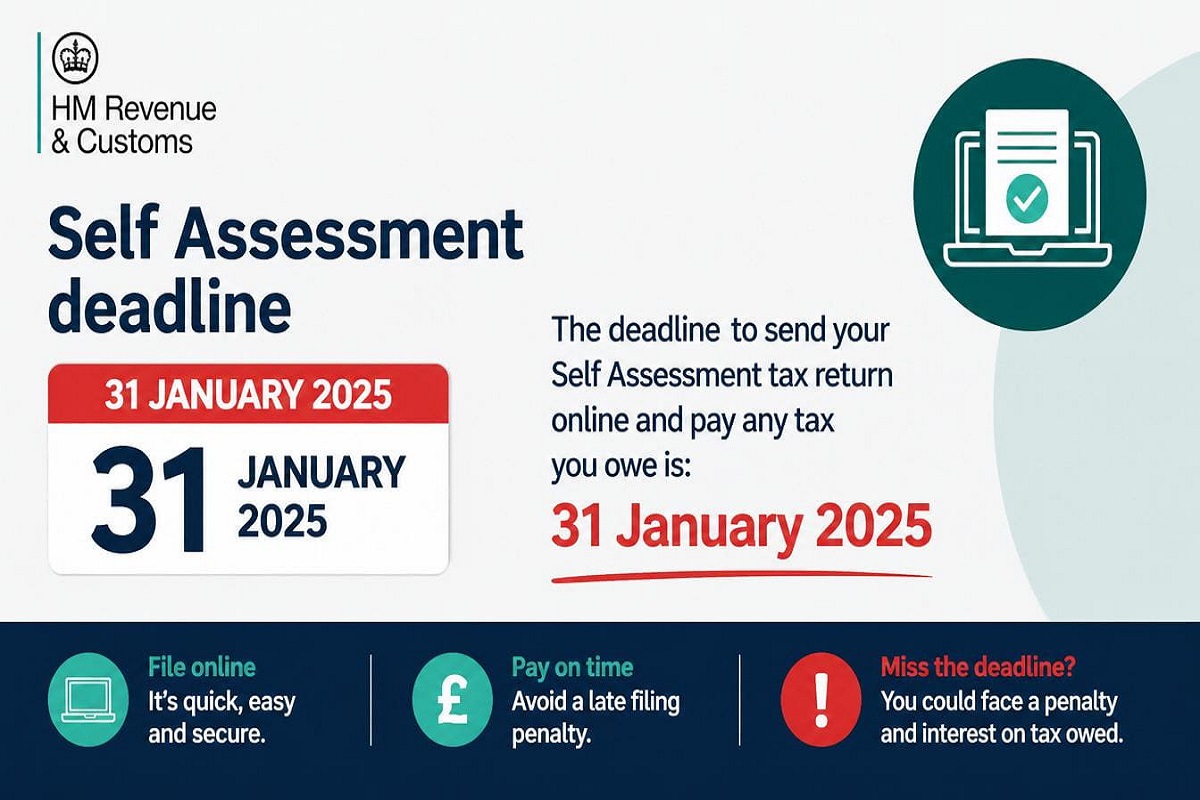
If you’re a sole trader, you must register for Self Assessment by 5 October following the end of the tax year in which you started trading. The tax year runs 6 April to 5 April. So if you start trading in November 2026, your deadline is 5 October 2027, and your first tax return is due by 31 January 2028.
That sounds generous until you notice what it does to people. Registering in October leaves you waiting on a UTR while the January filing deadline approaches, and it means reconstructing eighteen months of records you weren’t keeping. Register when you start trading, not when you’re forced to.
For the full walkthrough of either route, see our guide to registering a business in the UK.
Step 5: Set up your records before you trade
This is the step that moved. It used to sit at the end of the first year, when you finally sat down with a shoebox of receipts. From April 2026 it belongs at the start.
Making Tax Digital for Income Tax went live on 6 April 2026. If it applies to you, annual paperwork is replaced by digital record-keeping and four quarterly updates sent to HMRC through compatible software, with the Self Assessment return still due by 31 January.
Whether it applies depends on your qualifying income: gross self-employment turnover plus gross property income, combined, before expenses. Not profit.
| Qualifying income over | You start | Tested on |
|---|---|---|
| £50,000 | 6 April 2026 (live now) | 2024/25 return |
| £30,000 | 6 April 2027 | 2025/26 return |
| £20,000 | 6 April 2028 | 2026/27 return |
Takeaway: thresholds are tested on a return you’ve already filed, so you always get a year’s notice. Source: GOV.UK.
Here’s why it matters on day one even if you’re starting well below £50,000. Your first year’s turnover sets whether you’re in scope two years later, and the records you keep from month one are what make that transition painless. Setting up software now costs a few pounds a month and nothing in effort. Retrofitting eighteen months of transactions later costs a weekend you won’t enjoy. If you’d like help choosing software that meets the requirements, Eternity Accountants can advise on Making Tax Digital set-up.
Step 6: Money in and money out
Three things to sort before your first invoice goes out.
Where the money lands. A limited company must have its own bank account, because company money isn’t yours. Sole traders aren’t legally required to — though most personal account terms prohibit business use, and mixed accounts make quarterly reporting painful. We’ve covered whether sole traders need a separate business account in detail.
How you invoice. Your invoice needs to identify you clearly. Sole traders trading under a business name must still show their own name on formal documents. Agree payment terms in writing before you start work, not after a client goes quiet.
What you set aside. The single most common cash-flow failure in a first year is spending money that belongs to HMRC. Move a fixed percentage of every payment into a separate pot the day it arrives. You will thank yourself in January.
Step 7: Cover the risks that actually apply to you
Insurance guides tend to list every policy that exists. Most new businesses need one or two.
- Employers’ liability is legally required almost as soon as you employ anyone, with limited exceptions. This one isn’t a judgement call.
- Public liability matters if the public, clients or suppliers come into physical contact with your work. Many commercial clients and venues won’t engage you without it.
- Professional indemnity matters if you give advice or produce work that could cost a client money if it’s wrong. Some professional bodies require it.
- Data protection. If you handle personal data, UK GDPR applies from your first customer, and you may need to pay the ICO data protection fee. Check rather than assume.
Also worth ten minutes: check whether your trade needs a licence. Food, alcohol, taxis, childcare, waste carrying, street trading and several others do, and local authority requirements vary.
What it actually costs
Startup cost articles either give a scary total or avoid numbers entirely. Here is the honest version of the compulsory bit.
| Item | Cost | Required? |
|---|---|---|
| Registering as a sole trader with HMRC | Free | Yes, above £1,000 |
| Company incorporation, online | £100 (from 1 Feb 2026, was £50) | Yes, if incorporating |
| Company incorporation, same day | £156 | No |
| Confirmation statement, online | £50 a year | Yes, companies only |
| Identity verification via Companies House | Free | Yes, directors and PSCs |
| Accounting software | A few pounds a month upwards | Effectively, if in MTD scope |
| Insurance | Varies widely by trade | Depends — see above |
Takeaway: the statutory cost of starting up is either nothing or around £100. Everything above that is a choice. Companies House fees confirmed on the official fee schedule effective 1 February 2026.
Note that many guides still quote £50 for online incorporation. That figure was correct until 31 January 2026 and is now out of date by half.
What you don’t need yet
Almost every startup guide online is published by someone who sells one of the steps. So here is the section none of them will write — the things new business owners buy in week one and shouldn’t.
- A limited company, usually. If you’re testing an idea with modest income and no liability exposure, incorporating adds annual accounts, a confirmation statement and a Corporation Tax return for benefits you aren’t yet getting. You can incorporate later.
- VAT registration. Voluntary registration makes sense in specific situations — mainly if your customers are VAT-registered businesses and you have significant input VAT. If you sell to consumers and you’re well under the threshold, registering early usually makes you more expensive or less profitable.
- A trademark. Useful eventually. Rarely urgent in month one, and not the same thing as registering a company name.
- Premises. A lease is a long commitment against income you can’t forecast yet. Work from home or hire space by the day until the numbers argue otherwise.
- A full brand identity. Logos don’t generate revenue. Customers do.
The thread running through all of these: spend on the things that get you paid, and defer the things that only make you feel like a business.
Illustrative first year, month by month
ILLUSTRATIVE SCENARIO — NOT A REAL BUSINESS
Tom leaves an employed role and starts work as a self-employed joiner in June 2026. He decides to trade as a sole trader for the first year.
June 2026 — Registers for Self Assessment straight away rather than waiting. Sets up bookkeeping software and a separate account before the first job.
July 2026 — UTR arrives. Takes out public liability cover because two commercial clients ask for it before issuing a contract.
September 2026 — First quiet month. Uses it to check that every job is logged and every receipt photographed, rather than leaving it.
5 October 2027 — His registration deadline, already met sixteen months early. No scramble.
January 2028 — Files his first Self Assessment return for 2026/27 and pays the tax. Because he set money aside monthly, the bill is uncomfortable rather than catastrophic.
Spring 2028 — Turnover for 2026/27 came in at £61,000 gross. That figure puts him in scope for Making Tax Digital, and because his records have been digital since month one, the change costs him an afternoon.
The point of the timeline is the compounding effect of the early decisions. Tom didn’t do anything clever. He did the boring steps at the start instead of the end.
Common mistakes in the first twelve months
- Waiting until 5 October to register. The deadline is a backstop, not a plan. Late registration delays your UTR and compresses everything that follows.
- Incorporating because it sounds more professional. Plenty of one-person businesses form companies they don’t need, then pay for accounts and filings every year for a perception. Decide on liability and tax, not on how “Ltd” looks.
- Missing the identity verification step. Applications get held up because a co-director hasn’t verified. Sort it before you file anything.
- Confusing turnover with profit on every threshold. The trading allowance, VAT registration and the MTD thresholds are all tested on gross income. This one error causes more missed obligations than any other.
- Spending the tax money. A healthy-looking balance in December is not a healthy business if January’s bill is sitting inside it.
- Keeping receipts in a shoebox. Records must be kept from the day you start trading, not the day you register, and increasingly they must be digital.
- Not checking whether the trade needs a licence. Discovering this after you’ve started is expensive and occasionally disqualifying.
The accountant’s view
The question we get is “which structure should I choose?” The more useful question in year one is “what will I regret not having recorded?”
Structure can be changed. A sole trader who incorporates in year three loses nothing by having started simply. What can’t be recovered is a first year of missing records — the expenses nobody kept evidence for, the income that can’t be reconciled, the mileage that was never logged. That’s where money actually leaks, and it leaks quietly.
The other thing worth saying plainly: every threshold in the UK system is measured on gross income. Trading allowance, VAT, Making Tax Digital — all of them. We spend a surprising amount of time each year explaining to people who thought they were under a threshold that they were comfortably over it, because they were thinking about what they took home.
Frequently asked questions
How much does it cost to start a business in the UK?
Trading as a sole trader is free — registering with HMRC costs nothing. Incorporating a limited company online costs £100 from 1 February 2026, plus £50 a year for the confirmation statement. Beyond that, costs depend on your trade rather than on registration.
Do I need to register my business with Companies House?
Only if you’re forming a limited company or an LLP. Sole traders and ordinary partnerships register with HMRC instead, and have nothing to file at Companies House. Sole trader trading names are not registered or protected.
Can I start a business while working full time?
Yes. You can be employed and self-employed at the same time. Your employer handles tax on your wages through PAYE, and you report your self-employed income separately through Self Assessment. Check your employment contract for any conflict-of-interest clause.
When do I have to register a new business with HMRC?
By 5 October following the end of the tax year in which you started trading. If your gross self-employed income is £1,000 or less in the tax year, the trading allowance may mean you have nothing to register or report at all.
Do I need to verify my identity to start a business?
Only for a limited company. Since 18 November 2025 all new directors and people with significant control must verify their identity before incorporation can proceed, free of charge through GOV.UK One Login or via an authorised provider. Sole traders are not affected.
Should I start as a sole trader or a limited company?
Most people starting small, alone and with limited liability exposure are better off as a sole trader, and can incorporate later without difficulty. A limited company makes sense earlier where the trade carries real risk, where profits are substantial, or where clients require it.
Do I need an accountant to start a business?
Not to start. A simple sole trader business with clean digital records can usually manage the first year unaided. Professional help pays for itself sooner where there’s property income, employees, VAT, or an incorporation decision to weigh up.
What is the first thing to do when starting a business?
Establish whether what you’re doing counts as trading, then choose your structure. Everything else — registration, banking, software, insurance — follows from that decision, and doing it in the wrong order means redoing it.
Written by the Epiclectic Editorial Team
Epiclectic covers UK lifestyle, money, home, work and everyday-life topics for a national audience.
Technically reviewed by Shamayun Chowdhury
Senior Accountant at Major Accountancy, Leicester, and Lecturer in Accounting at Nottingham Trent University. CIMA qualified, with more than 15 years’ UK practice experience. Finance and tax content on Epiclectic is reviewed for accuracy before publication.
Last reviewed: September 2026
This article is general information about starting a business in the UK, not personal tax or legal advice. Figures apply to the 2026/27 tax year and were checked against GOV.UK and Companies House sources at the time of writing.