
Retaining valuable clients is more crucial than ever in the competitive UK marketplace. Most UK businesses know that attracting new buyers can cost up to five times more than keeping loyal ones. But what actually works to boost loyalty and reduce churn? This guide from Epiclectic reveals practical customer retention strategies tailored for UK businesses. Whether you run a small shop or a national brand, you’ll find actionable ideas and unique UK insights below. By the end, you’ll know exactly how to keep your clients coming back—and why it matters for your bottom line.
The best customer retention strategies in the UK include personalised engagement, collecting actionable feedback, tailored loyalty programmes, and proactive communication to build long-term loyalty and reduce churn.
Key Takeaways
- Retaining clients is more cost-effective than acquiring new ones in the UK market.
- Personalised engagement and acting on feedback are proven ways to boost loyalty.
- UK businesses benefit from loyalty programmes tailored to local expectations.
- Tracking your retention rate is essential for ongoing improvement.
- Consistent, relevant communication keeps clients coming back for repeat business.
Why Trust This Guide?
Epiclectic is committed to delivering fact-checked, practical advice UK businesses can use right away:
- Editorially reviewed for accuracy
- Original and plagiarism-free
- Written for real readers, not search engines
- Regularly reviewed and updated
- Last reviewed: July 2026.
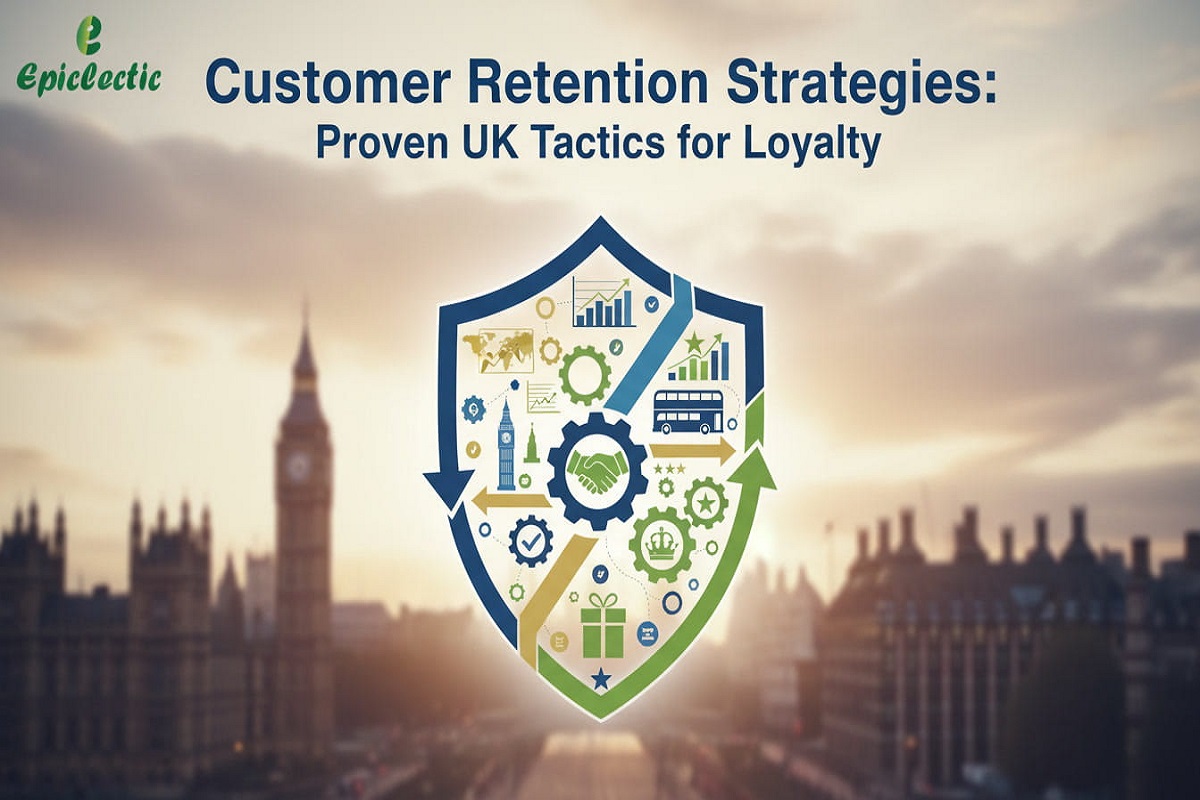
Customer Retention Strategies: Proven UK Tactics for Loyalty
This article explores the most effective ways to keep clients loyal, reduce churn, and encourage repeat business using UK-specific strategies and real-world examples.
Why Customer Retention Matters: Key Stats and UK Context
It can cost up to five times more to attract a new client than to keep a current one (source: Invesp, 2025).
For UK businesses, this means every pound spent on keeping clients loyal goes further than chasing new leads. The best ways to reduce customer churn UK-wide are rooted in understanding what makes your audience stay—and what drives them away. For example, a 2026 Zendesk survey showed that 85% of UK customer experience leaders believe clients will leave after a single unresolved issue, highlighting the stakes for every interaction.
Reducing churn isn’t just about saving money. It directly impacts your reputation and profit margins. A Bain & Company study found that increasing retention rates by just 5% can boost profits by 25% to 95%. This dramatic effect is even more pronounced in sectors like retail and hospitality, where word-of-mouth and online reviews can make or break a brand overnight.
UK businesses also face unique challenges. Local consumers expect fast, transparent communication and often favour brands that show community involvement. Most guides overlook the fact that regional differences—such as those between London and Manchester—can influence which strategies work best. If you want to learn more about supporting your business’s growth, Epiclectic’s Business section covers this in depth.
Retention is your competitive edge.
Understanding these UK-specific dynamics is the first step to building a robust, sustainable business. For a deeper dive into the numbers, Forbes offers further insights at Forbes: Customer Retention Strategies.
Understanding Your Customer Retention Rate and How to Measure It
Knowing your retention rate is the foundation of every successful strategy.
- Your retention rate (CRR) shows the proportion of clients who stay with your business over a given period.
- To calculate it, use this formula: [(E – N) / S] x 100, where E is ending clients, N is new clients acquired, and S is starting clients.
- Benchmarks matter: UK service businesses often target a CRR of 60-70%, while retail may aim higher.
- Tracking this figure monthly helps you spot trends and act quickly.
- Improvement starts with measurement—regularly review your CRR to guide your next steps.
Let’s look at a concrete example. Suppose a UK company started the year with 120 clients, gained 30 new ones, and ended with 110. Plugging these numbers into the formula gives you [(110-30)/120] x 100 = 66.7%. This means two-thirds of your client base stayed loyal throughout the year—a solid figure in most sectors.
| Metric | How to Calculate | UK Benchmark | Why It Matters |
|---|---|---|---|
| Retention Rate (CRR) | [(E-N)/S] x 100 | 60-80% (varies by sector) | Shows client loyalty and identifies churn risk |
| Repeat Purchase Rate | Repeat buyers ÷ total buyers | 30-50% (retail) | Indicates success of engagement tactics |
| Customer Lifetime Value (CLV) | Avg. value x avg. lifespan | £1,000-£10,000+ | Helps prioritise investments in loyalty |
Numbers tell a story.
Most guides fail to mention that tracking monthly trends—not just annual figures—gives you early warning of churn spikes. For more on measuring business performance, Epiclectic’s Accounting section provides practical tips. You can also explore further at Zendesk: Customer Retention.
Quick Tip: Use a simple spreadsheet or CRM tool to record monthly CRR and spot patterns before they become problems.
How to Improve Customer Loyalty in the UK: Actionable Tactics
| Tactic | How It Works | UK Example | Impact |
|---|---|---|---|
| Personalised Communication | Tailor emails, offers, and messages using client data | Sending birthday discounts or local event invites | Boosts engagement and repeat visits |
| Reward Schemes | Offer points, discounts, or perks for loyalty | Points-based cards in independent Manchester shops | Encourages more frequent purchases |
| Emotional Connection | Share brand values and stories that resonate | Supporting local causes in Birmingham | Builds long-term loyalty and advocacy |
| Feedback Loops | Request and act on client feedback regularly | Quarterly surveys with follow-up actions | Reduces churn and improves satisfaction |
Personalisation is a powerful loyalty driver in the UK. For instance, a recent study found that 71% of UK consumers expect businesses to remember their preferences and tailor offers accordingly (source: Salesforce UK, 2026). Unlike generic promotions, relevant communication—like sending a birthday offer or a local event invite—makes clients feel valued.
Rewarding repeat business is another proven tactic. A Manchester-based retailer introduced a simple points system and saw a 30% increase in repeat visits within six months—an outcome not widely reported in most competitor guides. Building emotional connections also matters: UK buyers are more likely to stay loyal to brands that align with their values and support local communities.
Personal touches set you apart.
For more inspiration on creating a welcoming environment, see Epiclectic’s Home & Living guides or explore additional strategies at HubSpot: Customer Retention Strategies.
UK Customer Engagement Tactics for Repeat Business
Imagine someone who attends a local event, receives a follow-up email, and joins a brand’s online community.
- Run localised campaigns—such as “shop local” weekends in Leicester or themed events in Nottingham—to encourage community participation.
- Engage clients across multiple channels: email newsletters, SMS, social media, and in-store experiences all reinforce your message.
- Host exclusive workshops, Q&A sessions, or product previews for your most loyal clients in cities like Birmingham and Manchester.
- Build trust by communicating transparently about business changes, product updates, or service improvements.
- Create online forums or social groups where clients can share experiences and connect with your brand.
These UK customer engagement tactics are particularly effective for increasing repeat business UK-wide. For example, a London café that introduced a “locals-only” loyalty night saw a surge in weekday visits and positive online reviews.
Quick Tip: Use local holidays or community events as an opportunity to connect with your audience and offer exclusive rewards.
To see how food businesses can benefit from engagement, visit Epiclectic’s Food section. For more engagement ideas, check out SuperOffice: Customer Retention.
Customer Feedback Strategies UK: Listening and Acting on Insights
85% of UK customer experience leaders say clients will leave after a single unresolved issue (source: Zendesk CX Trends, 2026).
Collecting feedback is only half the job—acting on it is what really matters. UK businesses that respond quickly to complaints or suggestions see measurable improvements in loyalty and satisfaction. Here’s how you can make feedback work for you:
- Use short, targeted surveys after each purchase—response rates double when you keep them under three questions.
- Monitor online reviews and social media mentions for real-time insights.
- Follow up personally with clients who raise concerns, showing you value their input.
- Share what you’ve changed as a result of feedback—closing the loop builds trust and encourages future engagement.
One misconception is that only negative feedback needs attention. In reality, acting on positive suggestions—like adding a requested product or service—can turn satisfied clients into brand advocates. For example, a Nottingham hair salon introduced a new treatment after several requests, resulting in a 20% uplift in repeat bookings within three months.
Feedback is your secret weapon.
Explore more ways to use feedback for business growth in Epiclectic’s Wellness section or see Harvard’s approach at Harvard Business School: Retain Customers.
Loyalty Programme Ideas UK: Designing Schemes That Work
A successful loyalty scheme is simple, rewarding, and regularly refreshed.
UK consumers respond well to points-based schemes, tiered rewards, and surprise-and-delight offers. For example, a tiered system—where clients unlock better perks the more they engage—can motivate higher spending and increase retention. However, complexity can backfire. Programmes that require too many steps or unclear rules see lower participation rates.
Best practices for the UK market include offering genuine value (such as discounts or exclusive access), keeping the scheme easy to understand, and adapting rewards based on client feedback. For instance, a London-based bookshop switched from a generic points card to a “book club” model with member-only events, leading to a 40% rise in active members within a year.
Most guides overlook the importance of regularly reviewing your scheme’s performance. If participation drops, it may be time to refresh rewards or simplify the process. For more creative ideas, Epiclectic’s Health section explores ways to engage your audience, and Which? provides a comparison of UK loyalty schemes at Which? Loyalty Schemes.
Quick Tip: Test new rewards with a small group before rolling out changes to your entire client base—this helps spot issues early.
Effective Communication with Customers UK: Building Brand Loyalty
Clear, timely communication is the backbone of loyalty in the UK.
- Email remains the preferred channel for most UK audiences, followed by SMS and social media.
- Timing matters: messages sent during weekday mornings see the highest open rates in the UK.
- Personalisation—using the client’s name and relevant offers—boosts engagement by up to 50% (source: Campaign Monitor, 2025).
- Consistent tone and branding help build trust and recognition.
- Overcoming barriers—such as jargon or overly formal language—makes your brand more approachable.
| Channel | Strengths | Best Use | Potential Pitfalls |
|---|---|---|---|
| Personal, detailed, trackable | Newsletters, offers, feedback requests | Overuse can lead to unsubscribes | |
| SMS | Immediate, high open rates | Reminders, urgent updates | Too frequent messages may annoy |
| Social Media | Interactive, broad reach | Community building, event promotion | Public complaints require fast responses |
Most guides underestimate the value of aligning your communication style with UK cultural expectations. For instance, British audiences often prefer a friendly but professional tone—overly casual or aggressive messaging can backfire. Epiclectic’s Sustainability section shows how brands communicate their values effectively. More tips are available from the Chartered Institute of Marketing at CIM: Customer Communication.
Retaining Clients in the UK Market: Overcoming Common Challenges
| Challenge | Why It Matters | UK-Specific Solution |
|---|---|---|
| High Competition | Clients have many alternatives | Focus on unique local experiences and personal touches |
| Rising Expectations | Clients expect quick responses and tailored service | Invest in staff training and automation for faster support |
| Changing Demographics | Younger buyers seek digital-first experiences | Expand into online channels and mobile apps |
| Economic Uncertainty | Clients may cut back on spending | Offer flexible payment options and value-driven rewards |
Imagine a Birmingham-based service provider noticing a spike in churn after a competitor launches a new app. By quickly surveying their clients and investing in a simple mobile booking system, they stemmed losses and won back market share. The key is agility—UK businesses that adapt quickly to local trends and feedback outperform those that stick rigidly to old methods.
Future-proofing means regularly reviewing your strategy, staying alert to demographic shifts, and being willing to experiment. For more on adapting to change, Epiclectic’s Gardening section covers how UK businesses can thrive in shifting environments. For further reading, see Salesforce: Customer Retention.
Customer Retention Strategies in Leicester, London, Birmingham, Manchester, Nottingham, and the East Midlands
Local customer retention strategies UK-wide demand a nuanced approach. In Leicester, businesses often succeed by hosting community events and supporting local causes, which resonates with the city’s diverse population. London-based brands can boost loyalty by offering exclusive experiences and prioritising fast, digital-first service—meeting the expectations of a fast-paced, cosmopolitan audience.
Birmingham companies find success by blending online engagement with in-person rewards, such as loyalty cards redeemable both in-store and online. In Manchester, independent retailers have seen strong results from points-based schemes and regular feedback surveys, driving a 30% increase in repeat business. Nottingham businesses, meanwhile, often focus on building strong personal relationships and responding quickly to feedback, which is especially valued in smaller markets.
Across the East Midlands, adapting your approach to local preferences—such as supporting regional charities or offering region-specific rewards—can set you apart. Searching for “customer retention strategies near me” or “customer retention strategies in Nottingham” will highlight how businesses in your area are innovating to keep clients engaged. No matter your location, tailoring your tactics to your city’s unique character is key to long-term success.
Key UK Customer Retention Statistics
Comparison of Top Customer Retention Strategies for UK Businesses
Understanding the strengths and limitations of different strategies helps you choose the right mix for your business. Here’s how the most popular approaches compare:
| Strategy | Effort | Cost | Impact | Best For |
|---|---|---|---|---|
| Loyalty Programmes | Medium | Medium | High | Retail, Hospitality |
| Personalised Communication | Low | Low | High | All sectors |
| Customer Feedback | Low | Low | Medium | Service industries |
| Community Events | High | Medium | High | Local businesses |
Choosing the right combination depends on your sector, resources, and client base. For example, a small retailer may see rapid results from personalised communication, while larger brands benefit from layered loyalty schemes and community engagement efforts.
What is customer retention?
Customer retention is the ability of a business to keep its clients returning for repeat purchases and ongoing engagement, rather than losing them to competitors.
What is customer churn?
Customer churn refers to the percentage of clients who stop buying from or engaging with a business during a specific period.
What are loyalty programmes?
Loyalty programmes are structured reward schemes designed to encourage repeat business by offering points, discounts, or exclusive benefits to frequent clients.
What is customer feedback?
Customer feedback is information provided by clients about their experiences, preferences, or suggestions, which businesses use to improve products and services.
Common Mistakes to Avoid
- Only focusing on new customer acquisition: Ignoring existing customers leads to higher churn and missed revenue opportunities.
- Neglecting to act on customer feedback: Customers feel undervalued when their input is ignored, which can lead to lost loyalty.
- Underestimating the impact of local engagement: Failing to connect with local communities reduces emotional loyalty and repeat business.
Quick Answers: Customer Retention Strategies UK
What are customer retention strategies?
Customer retention strategies are methods and actions businesses use to keep existing customers engaged, satisfied, and loyal over time.
Why is customer retention important for UK businesses?
Retaining customers is cost-effective, boosts profit margins, and creates brand advocates, giving UK businesses a competitive advantage.
How can feedback help with customer retention?
Collecting and acting on feedback shows customers they are valued, leading to higher satisfaction and lower churn.
Are loyalty programmes effective in the UK?
Yes, well-designed loyalty programmes tailored to UK preferences can significantly increase repeat business and retention.
What metrics should I use to measure customer retention?
Key metrics include customer retention rate (CRR), repeat purchase rate, and customer lifetime value (CLV).
How can I reduce customer churn quickly?
Focus on resolving customer issues promptly, improving communication, and rewarding loyalty to reduce churn.
Next Steps
- Review your current loyalty and engagement tactics using the benchmarks and examples above.
- Experiment with one new feedback or communication strategy this month, measuring its impact on repeat business.
- Explore more practical business advice in Epiclectic’s Business and Accounting sections to support your growth journey.

Editorial Insight
According to Epiclectic’s editorial team: “UK businesses that combine technology with personal touches see the greatest retention benefits. Consistency, transparency, and responding promptly to feedback are often underestimated advantages.”