
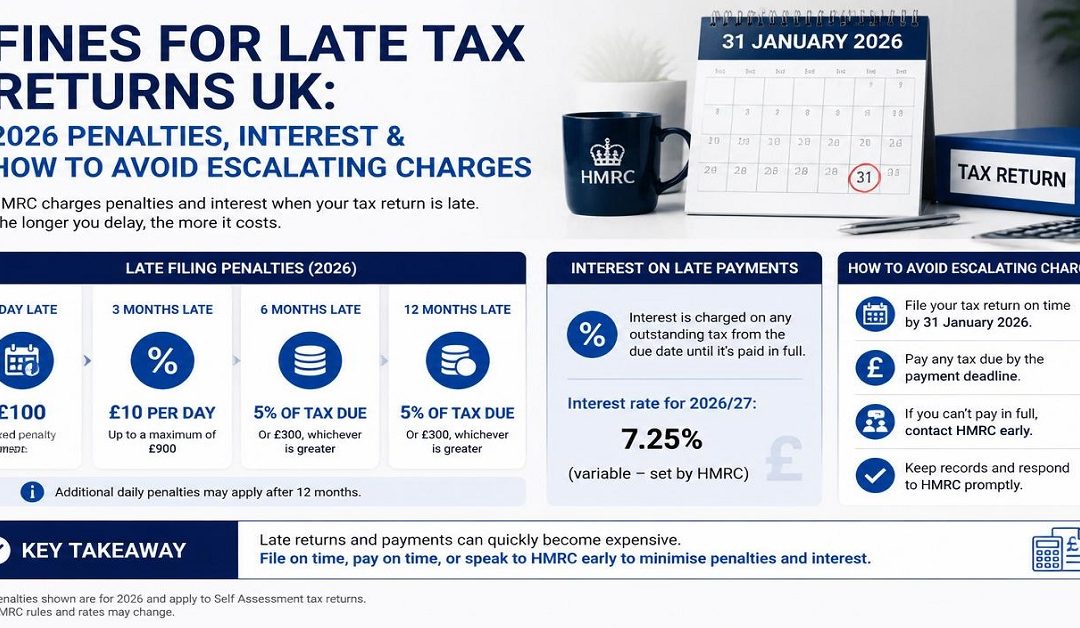
Fines for Late Tax Returns UK: 2026 Penalties, Interest & How to Avoid Escalating Charges
- ICAEW regulated and AAT accredited – official UK chartered accountant status
- 15+ years supporting UK contractors, SMEs & sole traders nationwide
- 500+ businesses and individuals supported across Leicester, London, Birmingham, and Manchester
- Transparent fixed fees from £7.50/month
- Fully insured HMRC registered agent
- Last reviewed: June 2026 – by our ICAEW/AAT qualified team
Last updated: June 2026
Missing a tax return deadline in the UK can lead to costly HMRC penalties and added stress for individuals and companies.
Understanding the latest fines for late tax returns is crucial to avoid unnecessary charges. This comprehensive 2026 guide explains penalties for late submissions, interest rates, and how to appeal an HMRC fine. We’ll help you avoid common mistakes and protect your business or personal finances.
Key Takeaways: Fines for Late Tax Returns UK
- Late tax return fines start at £100 and escalate sharply after 3, 6, and 12 months
- Both individual and company tax returns face strict deadlines and penalties
- Interest is charged on late payments, in addition to fixed penalties
- Appealing penalties is possible if you have a reasonable excuse
- Expert help reduces your risk of costly errors and missed deadlines
UK Tax Return Deadlines and What Happens If You Miss Them
The tax return deadline UK for Self Assessment in 2025/26 and 2026/27 is 31 October for paper returns and 31 January for online submissions. For company tax returns, the deadline is 12 months after the end of your company’s accounting period, but Corporation Tax must be paid within 9 months and 1 day of your year-end.
Key tax deadlines for 2025/26 and 2026/27
- Paper Self Assessment: 31 October 2026 for 2025/26, 31 October 2027 for 2026/27
- Online Self Assessment: 31 January 2027 for 2025/26, 31 January 2028 for 2026/27
- Company tax return: File within 12 months of your accounting year-end; pay Corporation Tax within 9 months and 1 day
What counts as a late submission?
Any submission received by HMRC after these deadlines is classed as a late self assessment submission uk or a late company filing, triggering automatic hmrc late filing penalties.
Immediate consequences of missing a deadline
What happens if you miss tax return deadline? An automatic £100 penalty applies for Self Assessment. For companies, £100 is charged if you file late, increasing with time overdue.
| Return Type | Filing Deadline | Penalty Triggered |
|---|---|---|
| Self Assessment (paper) | 31 October | £100 penalty from 1 November |
| Self Assessment (online) | 31 January | £100 penalty from 1 February |
| Company Tax Return | 12 months from year-end | £100 penalty from day after deadline |
More details at GOV.UK: Self Assessment deadlines.
Q: When is the UK tax return deadline?
A: 31 October for paper, 31 January for online returns.
Q: What happens if I file late?
A: You get a £100 penalty, which increases over time.
Q: Does the deadline differ for companies?
A: Yes. Companies file within 12 months of year-end and pay 9 months after year-end.
Fines for Late Tax Returns UK: What Are the HMRC Penalties?
HMRC late filing penalties are designed to escalate the longer your return remains outstanding. Both individuals and companies face strict penalty regimes.
Self Assessment late filing penalties explained
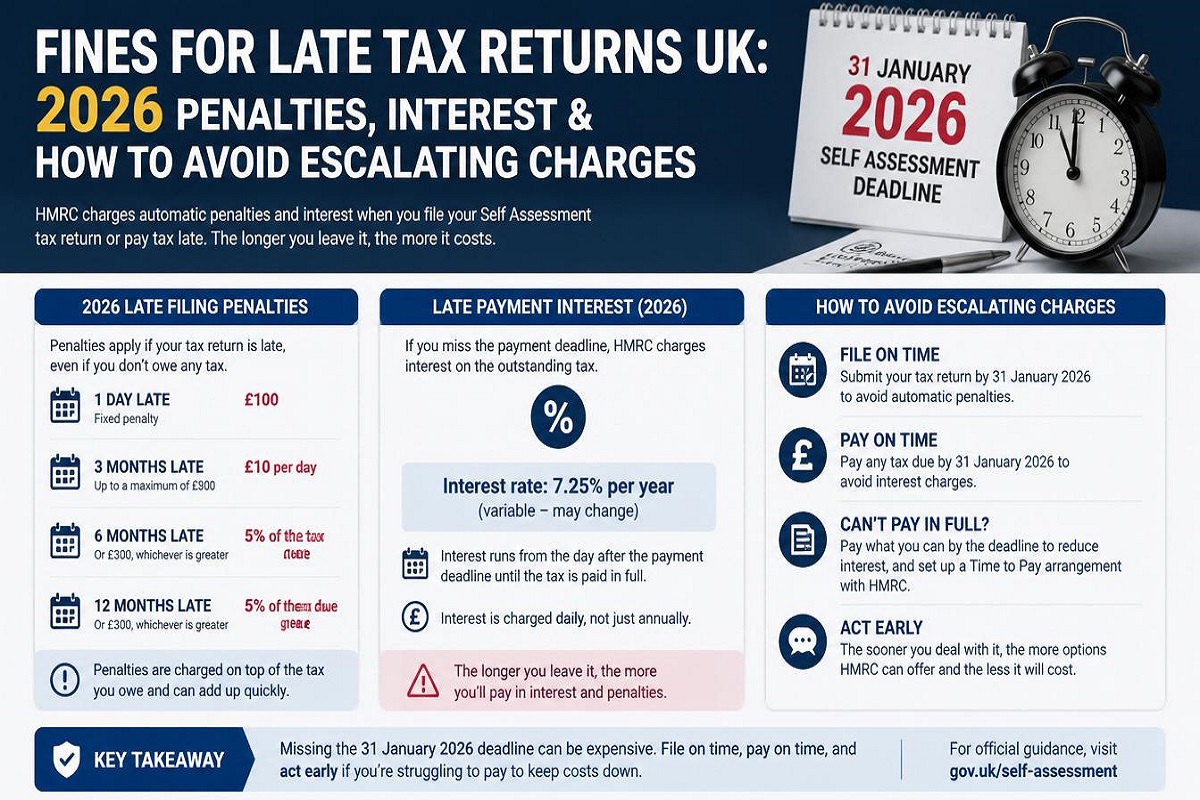
- £100 penalty – applied immediately after missing the deadline
- £10 per day penalty – starts after 3 months late, up to a maximum of 90 days (£900 total)
- 6 months late: 5% of tax due or £300 (whichever is greater)
- 12 months late: Additional 5% of tax due or £300 (whichever is greater)
Daily fines and escalating charges
For late self assessment submission uk, daily penalties can quickly add up. A two-month delay can cost you £100. A six-month delay could easily exceed £1,300, plus late tax payment interest uk.
Most people think the £100 penalty is the total cost. Actually, after three months, the daily rate (£10) applies for up to 90 days, which can surprise many.
Penalties for late company tax return
- £100 penalty for missing the deadline (Companies House and HMRC)
- £200 penalty if over 3 months late
- 10% of unpaid Corporation Tax if over 6 months late
- Further 10% for prolonged delays or repeated offences
If you file late for three consecutive years, initial penalties double.
| Delay | Self Assessment Penalty | Company Penalty |
|---|---|---|
| Up to 3 months | £100 | £100 |
| 3–6 months | £10/day up to £900 | £200 |
| 6–12 months | 5% of tax due or £300 (greater) | 10% of unpaid tax |
| 12+ months | Additional 5%/£300 | Extra 10% or prosecution |
Full penalty guidance: HMRC: Self Assessment penalties | HMRC: Company tax penalties
Q: What is the penalty for late Self Assessment?
A: £100 fixed, then £10/day after 3 months, plus higher penalties at 6 and 12 months.
Q: How much is the company late filing penalty?
A: Starts at £100, increases to £200, then 10% of unpaid tax after 6 months.
Q: Are penalties capped?
A: No, they escalate the longer you delay.
Interest and Extra Charges: Late Tax Payment Interest UK
Interest is charged on late tax payments for both Self Assessment and Corporation Tax. As of June 2026, HMRC’s late tax payment interest uk rate is 7.75% (subject to change by HMRC policy).
Current interest rates for late payments
- 7.75% annual rate (as of June 2026)
- Set by HMRC, reviewed quarterly (GOV.UK: Interest rates)
How interest is calculated by HMRC
Interest applies daily from the day after the payment deadline until the payment is made in full. This applies to Self Assessment, Corporation Tax, and VAT.
Examples for individuals and companies
- If you owe £4,000 in Self Assessment and pay 30 days late, you’ll owe about £25 in interest (plus any penalties).
- For a company owing £25,000 in Corporation Tax, 60 days late: interest would be about £318.
Q: What is the interest rate for late tax payments?
A: 7.75% as of June 2026, variable by HMRC policy.
Q: Does interest apply to all taxes?
A: Yes, including Self Assessment and Corporation Tax.
Q: How is interest calculated?
A: Daily from the day after the deadline until payment is made.
How to Appeal a Tax Return Fine: Grounds & Process
You can appeal a tax return fine if you have a valid excuse and act quickly. HMRC accepts appeals via online portal or by post, but strict timeframes apply.
What counts as a reasonable excuse?
- Serious illness or hospitalisation (yourself or a close family member)
- Bereavement of an immediate family member near the deadline
- HMRC system failures or postal delays outside your control
- Fire, flood, or theft affecting your records
Poor organisation, lack of funds, or forgetting the deadline are not accepted.
Step-by-step appeal process
- Gather evidence (e.g., medical letters, system error screenshots, police reports).
- Log in to the HMRC appeals portal or write a letter explaining your situation.
- Submit your appeal within 30 days of the penalty notice.
- Retain copies of all communications and proof of posting/online submission.
What to expect after appealing
- HMRC may cancel, reduce, or uphold the penalty.
- Appeals can take from a few weeks to several months.
- If refused, you may ask for an internal review or appeal to an independent tribunal.
Q: Can I appeal a late filing fine?
A: Yes, if you have a reasonable excuse.
Q: How do I appeal?
A: Use the HMRC online portal or send a written letter within 30 days.
Q: What is a reasonable excuse?
A: Illness, bereavement, HMRC system failure, etc.
Tax Return Extensions and Avoiding HMRC Fines
Can you get a tax return extension in the UK?
HMRC only grants a tax return extension uk in exceptional cases—such as severe illness, bereavement, or genuine system failure. You must provide evidence and apply as soon as you’re able.
Prevention: how to avoid late filing fines
- Mark deadlines in your calendar and set digital reminders
- Use accounting software like Xero, QuickBooks, FreeAgent or Sage for alerts
- Work with a professional accountant to ensure timely submission
- Maintain digital records to speed up the process
Best practices for timely submissions
- Start your bookkeeping early in the tax year
- Submit returns well ahead of the deadline—don’t leave it until January
- Check for missing forms or information by December
Q: Can I get an extension for my tax return?
A: Only in cases of serious illness or extreme circumstances, with evidence.
Q: How can I avoid HMRC fines?
A: File early, use reminders, and get professional help.
Q: What if I know I’ll be late?
A: Contact HMRC as soon as possible and explain your situation.
Industry-Specific Risks: Fines for Contractors, Landlords, and More
Some industries are more prone to late self assessment submission uk and errors, which increases their exposure to penalties and interest.
Common risks for contractors and freelancers
- Multiple income sources and contracts increase risk of missed income reporting
- Frequent expenses and allowable deductions often missed
- IR35 status disputes can lead to unexpected Self Assessment obligations
As a contractor: Many mistakenly believe umbrella company pays are always reported—if you operate a limited company, you must file a company return and Self Assessment. In Leicester, one contractor client saved over £1,200 by switching to Eternity Accountants before the penalty escalated.
Landlords: late return consequences
- Multiple properties or joint ownership complicate income reporting
- Section 24 mortgage interest restrictions trip up many landlords (individuals only, not companies)
- HMRC’s Let Property Campaign increases scrutiny
If you’re a landlord: Missing rental income or failing to declare property sales can trigger not only penalties but HMRC investigations. In Manchester, a landlord facing a £300 penalty had it reduced to £0 after Eternity submitted a successful appeal citing medical evidence.
Ecommerce, healthcare, and taxi drivers
- Ecommerce sellers: cross-platform income, VAT, and digital records
- Healthcare professionals: locum and part-time work complicate tax
- Taxi drivers: frequent cash income and expense tracking errors
For freelancers: In Nottingham, a creative freelancer avoided £900 daily fines by working with our specialist team to appeal an HMRC penalty (illness accepted).
Q: Which industries are most at risk for late filing?
A: Contractors, landlords, ecommerce, construction, healthcare, taxi drivers.
Q: Why is industry expertise important?
A: Complex income and expenses make mistakes more likely.
Q: Can industry accountants reduce fines?
A: Yes, by ensuring accurate and timely submissions.
DIY vs Professional Submission: Penalty Risk & Fee Comparison
Common DIY mistakes leading to penalties
- Missing the correct tax return deadline uk (confusing paper and online dates)
- Forgetting to declare freelance, rental, or overseas income
- Failing to claim allowable expenses, reliefs, or tax-free allowances
- Uploading incomplete or incorrect figures to HMRC
Most people think: Filing yourself saves money. Actually, one penalty can wipe out years of savings—especially with daily fines and interest.
Benefits of using a professional accountant
- Ensures correct and timely submission every year
- Reduces risk of self assessment penalty charges and HMRC checks
- Maximises tax reliefs and identifies errors before submission
- Can appeal penalties effectively if issues arise
Typical accountant fees vs penalty costs
| Factor | DIY | Professional |
|---|---|---|
| Cost | £0–£50 (software) | £100–£800+ |
| Time | 10–20 hours | 2–5 hours |
| Error Risk | High | Low |
| Tax Planning | Minimal | Comprehensive |
- Simple Employee Return: £100-£250
- Sole Trader: £150-£500+
- Landlord: £150-£600+
- Company Director: £200-£800+
See Accountant Pricing for more.
Q: Is it cheaper to file my own tax return?
A: Only if you avoid all mistakes, but one fine can exceed accountant fees.
Q: What are typical accountant fees?
A: £100–£800+ depending on complexity.
Q: How do professionals help avoid fines?
A: By meeting deadlines and ensuring accuracy.
Choosing the Right Support: Local, Online, and Software Solutions
Local accountant vs online accountant
| Factor | Online Accountant | Local Accountant |
|---|---|---|
| Cost | Lower | Higher |
| Meetings | Virtual | Face-to-face |
| Availability | Flexible | Office hours |
| Nationwide Support | Yes | Limited |
Both options can help you avoid penalties for late company tax return and Self Assessment fines. Local firms offer personal service; online providers bring flexibility and rapid digital support.
Best accounting software for avoiding fines
- Xero: Automated reminders, bank feeds, cloud-based
- QuickBooks: User-friendly, strong reporting tools
- FreeAgent: Designed for freelancers, MTD compliant
- Sage Accounting: Robust for growing businesses, strong compliance
Software can reduce hmrc late filing penalties by automating reminders and simplifying submission.
How specialist support prevents penalties
- Specialist accountants know the latest deadlines and penalty rules
- They double-check your figures and ensure HMRC agent authorisation
- They can appeal on your behalf if needed
Always verify your accountant’s credentials via ICAEW, ACCA, or AAT.
Looking for an accountant near me? Finding the right local accountant ensures you don’t fall foul of late filing penalties, especially if you’re a contractor, landlord, or freelancer with complex tax needs.
Eternity Accountants (6 Egginton Street, Leicester, LE5 5BA, 0116 4030595) is an ICAEW regulated and AAT accredited chartered accountant near me, supporting clients across Leicester, London, Birmingham, Manchester, Nottingham, and the East Midlands.
By City
Leicester: Our head office in the heart of Leicester offers face-to-face and online support for contractors and small businesses needing an accountant in Leicester.
London: Need an accountant in London? We support capital city clients with late filing appeals, IR35 advice, and digital tax solutions.
Birmingham: Our East Midlands team works closely with Birmingham clients facing complex Self Assessment or company return issues. Looking for an accountant in Birmingham? We’re a call away.
Manchester: For a specialist accountant in Manchester, we offer remote and local service, including help for landlords and freelancers facing HMRC fines.
Nottingham: Serving Nottingham and the wide region, our local accountant UK team helps clients avoid and appeal late tax return penalties.
East Midlands: As a regional firm, we cover the whole East Midlands with expert advice on Self Assessment, Corporation Tax and VAT.
Search Google for “accountant near me” or check Google Business Profile reviews for Eternity Accountants to see client feedback and ratings.
How to Verify an Accountant
| Check | Why It Matters | ✓ |
|---|---|---|
| ICAEW Registration | Regulation | ✓ |
| Practising Certificate | Legal permission | ✓ |
| Professional Indemnity Insurance | Client protection | ✓ |
| Google Reviews | Reputation | ✓ |
| Engagement Letter | Service clarity | ✓ |
| HMRC Agent Status | HMRC representation | ✓ |
5-Step Accountant Selection Process
- Identify your needs: (contractor, landlord, company, etc.)
- Shortlist 3 accountants: Compare experience and specialisms
- Verify regulation: ICAEW, ACCA, or AAT registration
- Compare pricing: Fixed fees, service levels
- Book consultation: Free initial meeting (in person or online)
When to Change Accountant: 5 Warning Signs
- Slow communication
- Filing errors or missed deadlines
- Lack of proactive tax planning
- No Making Tax Digital (MTD) support
- Poor explanation of HMRC penalties
Questions Your Accountant Should Ask You
- Are you VAT registered?
- Do you employ staff?
- Do you receive dividends?
- Do you own rental property?
- Do you expect income growth?
UK Accountancy Statistics 2026
- Over 93,000 chartered accountants in the UK (ICAEW, ACCA, CIMA, AAT)
- 1.5 million+ businesses enrolled in Making Tax Digital (HMRC)
- 800,000+ HMRC late filing penalties issued in 2024/25 (HMRC)
- 62% of UK SMEs use an external accountant (ONS)
Tax Software Comparison: Xero vs QuickBooks vs FreeAgent vs Sage
| Software | Best For | MTD Compliant | Automated Reminders | Cost/Month |
|---|---|---|---|---|
| Xero | Limited companies, contractors | ✓ | ✓ | £14+ |
| QuickBooks | Sole traders, small businesses | ✓ | ✓ | £12+ |
| FreeAgent | Freelancers, contractors | ✓ | ✓ | £14+ |
| Sage Accounting | Growing businesses | ✓ | ✓ | £12+ |
Summary of UK Tax Return Penalties (2025/26 & 2026/27)
| Delay | Self Assessment Penalty | Company Penalty |
|---|---|---|
| Up to 3 months | £100 | £100 |
| 3–6 months | £10/day up to £900 | £200 |
| 6–12 months | 5% of tax due or £300 (greater) | 10% of unpaid tax |
| 12+ months | Additional 5%/£300 | Extra 10% or prosecution |
Decision Tree: What Do You Need? → Who to Speak To?
| Your Need | Who to Speak To |
|---|---|
| Tax Return | Accountant |
| VAT Advice | Accountant |
| Corporation Tax | Accountant |
| Pension Transfer | FCA Adviser |
| Investment Advice | FCA Adviser |
| Mortgage Advice | Mortgage Adviser |
AI Overview: Quick Answers on Fines for Late Tax Returns UK
- What is the HMRC late filing penalty in 2026? A £100 penalty, then £10/day after 3 months.
- Can I appeal a tax return fine? Yes, with a valid reason and evidence.
- Is interest charged on late tax payments? Yes, at 7.75% in June 2026.
- How can I avoid fines? File on time, use reminders, or appoint an accountant.
- Are penalties higher for companies? Company penalties escalate and can include 10% of unpaid tax.
Expert Commentary: Eternity Accountants Insights
According to our ICAEW-qualified team at Eternity Accountants:
- Many clients underestimate how quickly HMRC penalties escalate. Even a short delay can lead to hundreds in fines and interest.
- Most overlooked:
- Not realising interest is charged daily on late payments.
- Assuming appeals are always successful without strong evidence.
- Forgetting company directors are personally responsible for late company returns.
Real-World Example: Freelancer in Leicester
Scenario: Client forgot online Self Assessment deadline by 2 months.
Before: £100 penalty issued, risk of £10/day fines.
After: Appeal submitted (illness accepted), penalty cancelled.
Outcome: Saved £100+ and avoided further daily fines.
Figures: £100 penalty, potential £900 daily fines avoided.
Common Mistakes Leading to HMRC Penalties
- Missing the online filing deadline due to confusion over paper vs online dates. (31 October is for paper, 31 January for online) – £100 penalty.
- Assuming weekends or holidays extend the HMRC deadline. (Deadlines are fixed, even if on a weekend) – Immediate late filing penalty applies.
Why Choose Eternity Accountants?
- ICAEW regulated, AAT accredited
- Fixed fees from £7.50/month
- MTD compliant and ready for 2026/27
- Dedicated accountant for every client
- UK-wide service with local Leicester base
- Free initial consultation
- Transparent reporting and communication
- Over 500 businesses and individuals supported
Next Steps
- Book a free consultation with Eternity Accountants at eternityaccountants.co.uk
- Download our Self Assessment and tax deadline checklist
- Sign up for deadline reminders and annual review meetings
FAQs – Fines for Late Tax Returns UK
- How much should I pay an accountant? Fees typically range from £100–£800+ depending on complexity and services needed.
- Is a chartered accountant worth it? Yes, for regulated expertise, reduced risk, and tax-saving advice.
- Can I switch accountants mid-year? Yes, you can switch at any time with proper handover and notice.
- How do accountants save money on tax? They ensure compliance, claim all reliefs, and provide tailored tax planning.
- Should a sole trader use an accountant? Yes, to avoid errors, save time, and reduce risk of fines.
- Can an accountant deal with HMRC for me? Yes, with HMRC agent authorisation, your accountant can manage returns and appeals.