
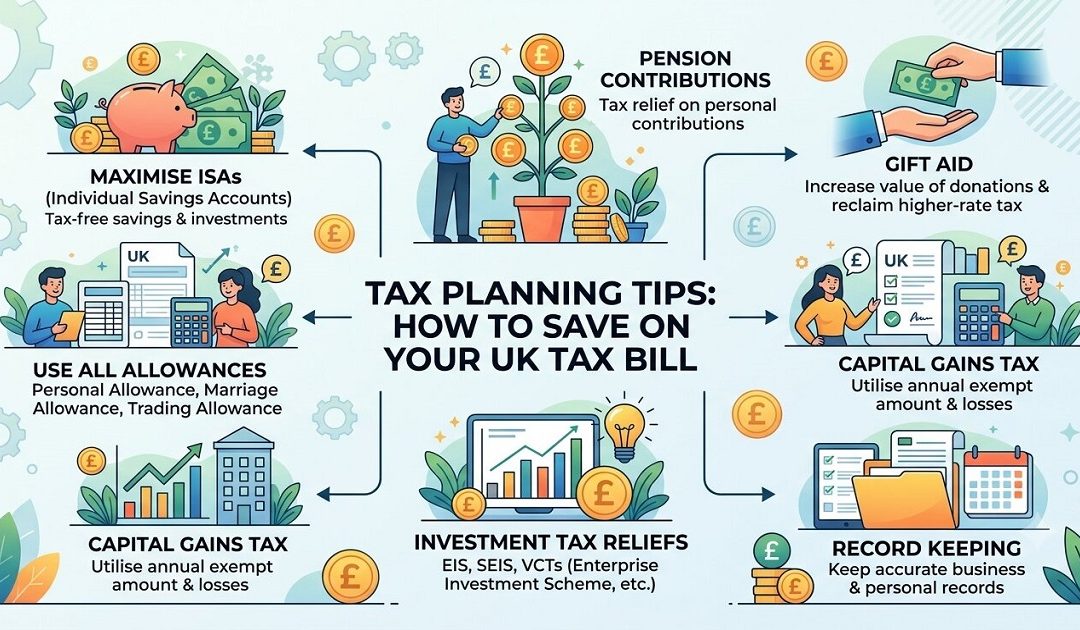
Tax planning tips matter to UK readers who want clear, practical answers. This guide from Epiclectic covers the essentials in plain English, with steps you can use right away. Whether you’re a beginner or already know the basics, you’ll find useful advice below. We’ll walk through exactly what to consider and how to get it right. By the end, you’ll know precisely what to do next.
The most effective tax planning tips for UK taxpayers include maximising all available tax allowances, keeping accurate records of deductible expenses, making use of tax-efficient investments like ISAs and pensions, and planning income or capital gains to stay within optimal tax thresholds. Regularly reviewing your financial situation in line with current HMRC rules ensures you take advantage of every legal opportunity to reduce your tax bill.
Key Takeaways
- Maximise your UK tax allowances each year to reduce your tax bill.
- Keep clear records to claim all tax-deductible expenses.
- Consider tax-efficient investments like ISAs and pensions.
- Review your situation annually to adapt to changing tax rules.
- Small businesses and the self-employed have unique tax-saving opportunities.
Why Trust This Guide?
Epiclectic delivers practical, fact-checked advice from UK tax specialists, updated for the latest rules.
- Editorially reviewed for accuracy
- Original and plagiarism-free
- Written for real readers, not search engines
- Regularly reviewed and updated
- Last reviewed: July 2026.
Tax Planning Tips: How to Save on Your UK Tax Bill
This article covers actionable tax planning tips for UK individuals and small businesses, including allowances, deductible expenses, investment options, and regional support. You’ll find practical steps and real-world examples for 2025/26 and beyond.
Understanding UK Tax Planning: Key Allowances and Reliefs for 2025/26
The average UK taxpayer overpays £421 a year by not claiming all available allowances (source: Which?). Making the most of UK tax allowances and reliefs can meaningfully reduce the amount you owe each year. These allowances are set by HM Revenue & Customs (HMRC) and are updated annually, so staying informed is crucial for both individuals and small businesses.
Most people think allowances are only for high earners. Actually, almost every UK taxpayer can use at least one key allowance. The main ones for 2025/26 are:
The standard tax-free threshold remains at £12,570, which means you pay no tax on your first £12,570 of income. If you’re married or in a civil partnership, you may be able to transfer £1,260 of this threshold to your partner using the Marriage Allowance. Dividend income enjoys a separate £500 tax-free limit, while interest from savings is covered by the Personal Savings Allowance—£1,000 for basic rate taxpayers and £500 for higher rate taxpayers. For capital gains, the annual exemption is now just £3,000, down from £6,000 in 2024/25.
These thresholds have been frozen until at least 2028, meaning more income is taxed as wages and prices rise—a phenomenon known as ‘fiscal drag.’ For example, someone whose pay increases with inflation may find themselves paying a higher rate of tax, even if their real spending power hasn’t changed. This is why reviewing your situation each year is essential.
What is HM Revenue & Customs (HMRC)?
HMRC is the UK government department responsible for collecting taxes, paying some forms of state support, and enforcing tax laws and regulations.
For more on how these rules affect you, visit Epiclectic’s Accounting section, or see the official rates at GOV.UK.
Quick Tip: Always check for updates to allowances each April, as even small changes can affect your bill.
Frozen thresholds mean your tax bill can rise even if your income only keeps pace with inflation.
How to Reduce Your Tax Bill: Proven Strategies for UK Taxpayers
Smart strategies can help you keep more of your money within HMRC rules.
- Use every available allowance, including the main threshold, marriage transfer, and savings/dividend limits.
- Claim all eligible reliefs, such as pension contributions and Gift Aid on charitable donations.
- Split income between spouses or civil partners to stay in lower tax bands where possible.
- Time asset sales or bonuses to fall in a year when your income is lower, keeping you in a lower band.
- For higher earners, reclaim lost allowances by increasing pension contributions or using salary sacrifice schemes.
- Review your finances every year, especially after major life events such as marriage, starting a business, or receiving an inheritance.
Below, you’ll find a table comparing the most popular tax-saving strategies for UK taxpayers and their key features.
| Strategy | Who Benefits | Potential Saving | Key Risks |
|---|---|---|---|
| ISA Contributions | Individuals, couples | Up to £1,000+ annually | Investment risk |
| Pension Contributions | Employees, self-employed | Up to 45% tax relief | Funds locked until retirement |
| Dividend Allowance Use | Shareholders | £500–£1,000 per year | Dividends fluctuate |
| Annual CGT Exemption | Asset owners | Up to £3,000 in 2024/25 | Exemption reducing |
For example, if you’re a basic rate taxpayer and contribute £2,000 to a pension, HMRC adds £500 in tax relief, and you may get even more if you’re a higher rate taxpayer. Timing is also crucial: selling an asset just after the end of the tax year can give you a fresh annual exemption.
Quick Tip: If your income is just above a threshold, increasing pension contributions can bring you back into a lower band and restore lost allowances.
Reviewing your situation annually is vital—small changes can have a big impact. For more business-focused strategies, see Epiclectic’s Business section or HMRC’s guidance on tax relief for individuals.
Missing a relief or allowance for just one year can cost you hundreds of pounds.
What Expenses Are Tax Deductible in the UK?
Do you know which costs you can claim to lower your taxable income?
| Category | Common Deductible Expenses | Who Can Claim? |
|---|---|---|
| Business travel | Train/bus fares, mileage, accommodation | Self-employed, limited companies |
| Office costs | Stationery, phone bills, internet, software | Employees (if not reimbursed), self-employed |
| Professional fees | Memberships, subscriptions, accountancy | Employees, self-employed |
| Home-working | Proportional heating, electricity, rent/mortgage interest | Self-employed, some employees |
| Tools and equipment | Computers, uniforms, specialist tools | Self-employed, some employees |
| Property expenses | Letting agent fees, repairs, insurance | Landlords |
Claiming the right expenses can make a substantial difference, especially for the self-employed and landlords. For example, a freelance designer who works from home can claim a portion of their rent, utilities, and even council tax as business expenses. Many miss out simply because they don’t keep receipts or use digital tools to track spending.
Over 4 million UK taxpayers file a Self Assessment return each year (source: HMRC).
Most people think only big businesses benefit from expense claims. Actually, even side hustlers and part-time landlords can claim relevant costs, provided they keep clear records. The key is that expenses must be ‘wholly and exclusively’ for your work.
What are tax-deductible expenses?
Tax-deductible expenses are costs that can be subtracted from your income to reduce the amount subject to UK tax, provided they are incurred wholly and exclusively for business or work purposes.
Quick Tip: Use digital apps or spreadsheets to snap receipts and categorise expenses as you go—this saves time at year-end and protects you in the event of a HMRC enquiry.
For more on home-related claims, see Epiclectic’s Home & Living section or HMRC’s list of allowable expenses.
Poor record-keeping is the number one reason for missed expense claims.
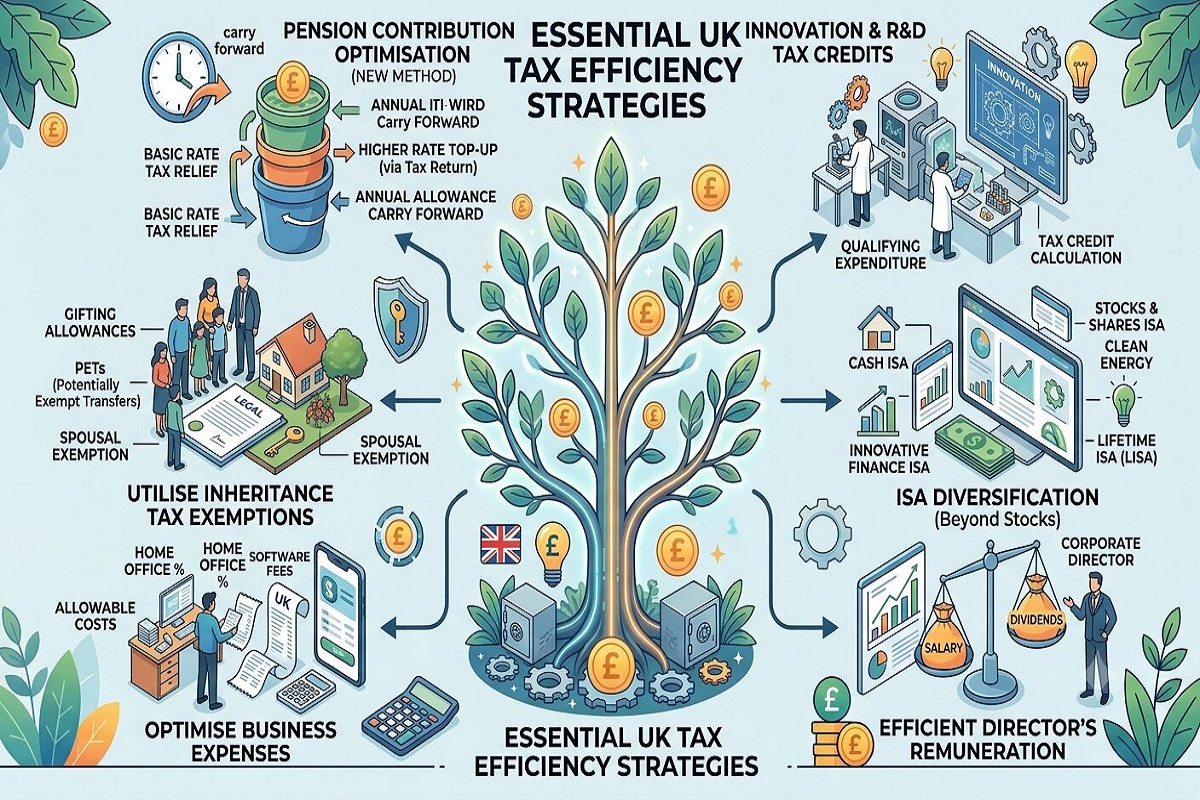
Tax-Efficient Investments: Best Ways to Save Tax in the UK
Imagine someone who puts £20,000 into a stocks & shares ISA each year for five years. Not only does all growth and dividends remain untaxed, but if the investments perform well, they could save thousands in tax compared to holding the same assets outside an ISA.
- Cash ISAs, stocks & shares ISAs, and innovative finance ISAs let you earn interest, dividends, and capital gains free from UK tax.
- Pension contributions benefit from tax relief at your highest rate—up to 45% for additional rate taxpayers, and money inside a pension also grows tax-free until withdrawal.
- Venture Capital Trusts (VCTs) and Enterprise Investment Schemes (EIS) offer upfront tax reliefs and can reduce capital gains tax when you sell, but they carry higher investment risk.
- Property investments can be structured to maximise loan interest deductions and use of the capital gains exemption, though rules have tightened in recent years.
- Balancing risk is crucial: ISAs and pensions are generally safer, while VCTs and EIS are for those who can tolerate more volatility.
Quick Tip: If you’re close to the annual ISA or pension limit, consider using both to spread your investments and maximise tax-free growth.
For more on sustainable and responsible investing, see Epiclectic’s Sustainability coverage or the official ISA guidance.
ISAs and pensions can shelter more than £40,000 per year from UK tax if used to their full limits.
Self Assessment Tax Advice: Avoiding Common Pitfalls
Missing the Self Assessment deadline triggers a £100 penalty, with further fines after three months (source: HMRC). Self Assessment is required for anyone with untaxed income—this includes the self-employed, landlords, company directors, and those with significant savings or investment income. If you’re unsure, HMRC’s online tool can help you check if you need to file.
Key deadlines for the 2025/26 and 2026/27 periods are 31 October 2026 for paper returns and 31 January 2027 for online submissions. Payments are also due by 31 January, with a second payment on account for some by 31 July. Missing these dates can lead to automatic penalties and interest.
Most people think only the self-employed need to file. Actually, anyone with untaxed income above £1,000—including landlords and some investors—may need to complete a return.
- Late filing or payment
- Missing sources of income, such as bank interest or overseas earnings
- Poor record-keeping, leading to errors or missed claims
- Forgetting to claim eligible reliefs, such as pension contributions or Gift Aid
- Not registering for Self Assessment in time
To avoid penalties, start preparing early. Gather all your income records, keep digital copies of receipts, and double-check your entries before submitting. For more practical tips, visit Epiclectic’s Food section for guides on managing receipts for home-based businesses, or see the official HMRC Self Assessment page.
Quick Tip: Set calendar reminders for key deadlines and keep a checklist of documents to collect each year.
Missing just one deadline can cost you more than £100 in penalties.
Capital Gains Tax and Income Tax Tips for UK Taxpayers
Strategic use of annual exemptions and timing can reduce your overall tax liability.
The capital gains exemption has dropped to £3,000 for 2025/26. Gains above this are taxed at 10% (basic rate) or 20% (higher rate), with even higher rates for residential property. One surprising fact: unlike many assume, you can’t carry forward unused capital gains exemptions—they’re ‘use it or lose it’ each year.
For example, if you plan to sell two assets, selling one in March and one in April could let you use two years’ exemptions, saving up to £600 (at 20%) compared to selling both in the same year. For landlords, letting relief and private residence relief may apply, but rules have tightened since 2020.
On the income side, using salary sacrifice for pensions or childcare vouchers can lower your taxable income, restoring lost thresholds. Landlords should claim all allowable expenses, including mortgage interest relief (now limited to a basic rate tax credit), and consider transferring property to a spouse in a lower band if appropriate.
What is Capital Gains Tax (CGT)?
CGT is a tax on the profit made when you sell or dispose of an asset that has increased in value, such as shares, property, or valuable items.
Quick Tip: If you have investments with losses, sell them in the same year as gains to offset and reduce your bill.
For more on health-related allowances, see Epiclectic’s Health section or HMRC’s CGT guidance.
Unused exemptions cannot be carried forward—plan asset sales carefully.
Tax Planning for Small Businesses in the UK: Essentials for 2025/26
Small businesses face unique rules and opportunities for saving tax.
- Corporation Tax is 19% for profits under £50,000 and 25% for profits over £250,000, with a tapered rate in between.
- The VAT registration threshold is £90,000 as of April 2024—registering is mandatory if your turnover exceeds this in any 12-month period.
- Allowable expenses include staff costs, premises, marketing, and professional fees. SMEs can also claim capital allowances on equipment and vehicles.
- Making Tax Digital (MTD) requires most businesses to keep digital records and submit returns using compatible software.
- Review your business structure each year—a sole trader may benefit from incorporating, depending on profits and future plans.
See the comparison table below for a quick overview of key actions and their benefits for small businesses.
| Action | Who Should Consider | Potential Benefit | Compliance Note |
|---|---|---|---|
| Claiming all allowable expenses | All SMEs | Reduces taxable profit | Receipts and digital records required |
| Using capital allowances | Asset-heavy businesses | Accelerated tax relief on equipment | Check HMRC rules annually |
| Registering for VAT | Turnover > £90,000 | Reclaim VAT on purchases | Quarterly digital returns |
| Reviewing business structure | Growing businesses | Potential lower tax rate | Weigh costs vs. savings |
For more, see Epiclectic’s Business category or HMRC’s business tax hub.
Quick Tip: Digital record-keeping isn’t just for compliance—cloud software can flag missing claims and automate reminders.
Switching from sole trader to limited company can save tax, but only if profits are high enough to offset extra admin costs.
Local Tax Planning Tips in Leicester, London, Birmingham, Manchester, Nottingham, and the East Midlands
Imagine a business owner in Leicester who discovers a local business grant that offsets part of their corporation tax bill, or a homeowner in Nottingham who qualifies for a council tax energy rebate. Regional differences in property taxes, grant opportunities, and cost of living can all affect your tax-saving strategies.
Across the UK, cities like London and Manchester offer targeted support for start-ups, while Birmingham and the East Midlands have business rates relief schemes and local enterprise grants. Always check your local authority’s website or HMRC’s ‘find local council’ tool for up-to-date information.
- Leicester: Look for local business grants and targeted property tax reliefs.
- London: Check for city-wide start-up incentives and green energy rebates.
- Birmingham: Business rates relief and local enterprise partnerships may provide extra support.
- Manchester: Targeted grants for creative industries and tech start-ups.
- Nottingham: Council tax support and small business rate discounts.
- East Midlands: Regional LEPs often offer grants and advice tailored to rural businesses.
To find trusted information, use HMRC’s local council finder or visit Epiclectic’s Business section for city-specific guides. Asking “tax planning tips near me” in your search engine can also reveal region-specific opportunities.
Local grants and reliefs can change yearly—set a reminder to check every April.
Key UK Tax Planning Statistics for 2025/26
Common Mistakes to Avoid
- Missing key HMRC deadlines: Late filing can result in automatic penalties starting at £100, increasing after 3 months.
- Not claiming all eligible allowances: Many UK taxpayers overlook allowances like the Marriage Allowance or the full personal allowance.
- Poor record-keeping: Without clear records, you may miss out on deductible expenses or struggle during a HMRC enquiry.
Frequently Asked Questions
What are the most important UK tax allowances to use?
The main allowances include the personal allowance (£12,570), marriage allowance, dividend allowance, and capital gains tax allowance.
How do I reduce my tax bill if I’m self-employed?
Track and claim all business expenses, use your personal allowance, and consider pension contributions for extra relief.
What is the deadline for Self Assessment tax returns?
For the 2025/26 tax year, paper returns are due 31 October 2026, online returns by 31 January 2027.
Are ISAs the best way to save tax in the UK?
ISAs allow tax-free growth on savings and investments, making them one of the most tax-efficient options for many UK savers.
How can small businesses in the UK plan for tax efficiently?
By using all allowable deductions, keeping digital records, and regularly reviewing their structure and allowances.
What happens if I miss the Self Assessment deadline?
You face a £100 late filing penalty, plus further penalties if more than 3 months late.
Editorial Insight
According to Epiclectic’s editorial team: “UK tax planning is most effective when you review your situation every year, keep excellent records, and use all allowances. Many taxpayers miss out by not staying updated on changing HMRC rules.”