
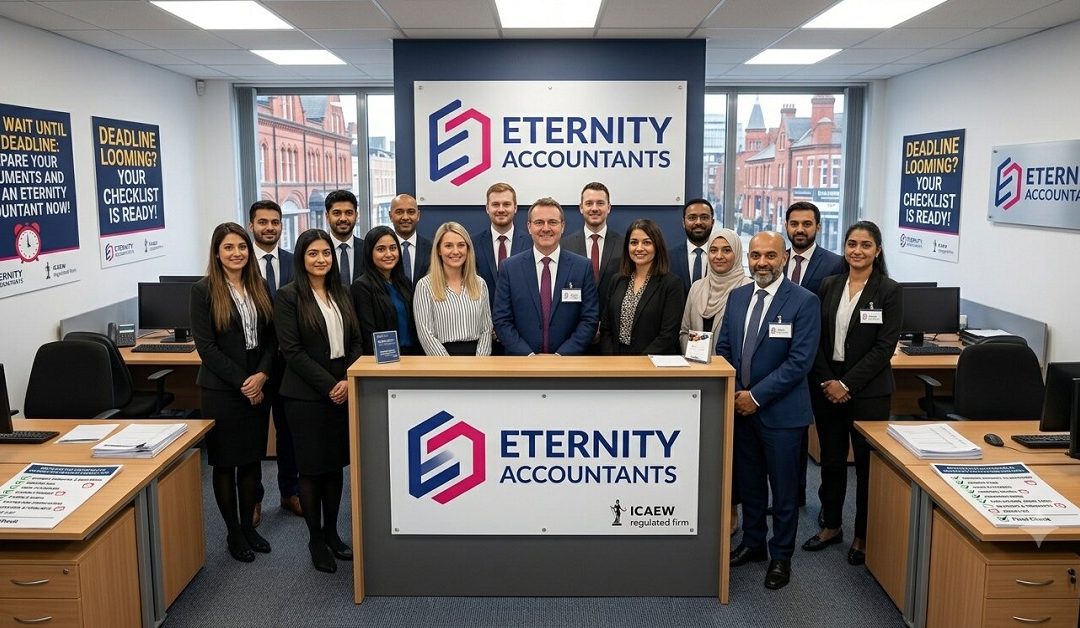
How to Find an Accountant in the UK: The Complete 2026 Guide
To find an accountant in the UK, look for professionals regulated by ICAEW, ACCA, or AAT. Check their qualifications, whether they hold a practising certificate, and if they carry professional indemnity insurance. Use official directories such as the ICAEW Find a Chartered Accountant tool or ACCA’s global directory to verify credentials before making contact.
Finding the right accountant could be the most important financial decision your business makes. Not all accountants in the UK are regulated — knowing where to look matters. Whether you are a sole trader or limited company director, the right support saves time and money. This guide explains exactly how to find an accountant you can trust in 2026.This guide focuses on how to choose the right accountant — questions to ask, red flags to avoid, and qualification checks. For detailed cost breakdowns, see our full accountant cost guide.
Why Trust This Guide
- ✓ Reviewed by ICAEW-qualified accountants at Eternity Accountants
- ✓ Updated June 2026
- ✓ Based on current HMRC and FCA guidance
- ✓ Written for UK small businesses, sole traders, landlords and limited company directors
- ✓ Eternity Accountants is ICAEW-regulated and AAT-accredited
Key Takeaways
- In the UK, anyone can legally call themselves an accountant — always verify qualifications through ICAEW, ACCA, AAT, or another recognised body.
- Use official directories such as ICAEW Find a Chartered Accountant or ACCA’s member finder to identify regulated professionals.
- A qualified accountant can manage Self Assessment, Corporation Tax, VAT, Making Tax Digital compliance, Payments on Account, and HMRC enquiries.
- Accountants cannot legally give investment or pension transfer advice — that requires a separately FCA-authorised adviser.
- Eternity Accountants in Leicester serves sole traders, landlords, SMEs and limited company directors across the UK — call 0116 4030595 for a free consultation.
To find an accountant in the UK, search official directories from ICAEW, ACCA, or AAT. Look for a practising certificate, professional indemnity insurance, and relevant experience with your business type — whether sole trader, landlord, or limited company director.
What Is an Accountant?
An accountant is a qualified financial professional who helps individuals and businesses manage tax obligations, maintain accurate financial records, prepare accounts, submit tax returns, and comply with HMRC regulations. Depending on their qualifications and regulatory status, accountants may also provide tax planning, bookkeeping, payroll, VAT support, and business advisory services.
In Short
- Use ICAEW, ACCA, or AAT directories to find a regulated, qualified accountant.
- Always confirm the accountant holds a current practising certificate and professional indemnity insurance.
- Understand what an accountant can and cannot do — regulated financial advice requires FCA authorisation.
- Fee ranges vary widely: from £100–£250 for a simple tax return to £800+ for a company director package.
Need help finding a qualified accountant? Speak to our ICAEW-qualified team at Eternity Accountants today. Call 0116 4030595 or email info@eternityaccountants.co.uk
Who Needs an Accountant in the UK?
Professional accounting support can benefit:
- Sole traders
- Freelancers and contractors
- Landlords
- Limited company directors
- Partnerships
- E-commerce businesses
- Start-ups
- Growing SMEs
Even individuals with relatively simple tax affairs may benefit from professional advice, particularly where multiple income sources, rental properties, or self-employment income are involved.
Why Does Finding the Right Accountant Matter So Much in 2026?
Finding an accountant who is genuinely qualified protects your business from HMRC risk, financial errors, and costly penalties. In the UK, the title accountant is not legally protected — meaning anyone, regardless of training, can offer accountancy services to the public.
The Hidden Risk: Unregulated Accountants in the UK
Unlike the title chartered accountant — which is legally protected — the generic term accountant carries no qualification requirement in UK law. An unregulated provider may carry no professional indemnity insurance and cannot be held to account by a professional body. If they file your tax return incorrectly, you remain personally liable to HMRC for any underpaid tax, interest, or penalties.
What a Good Accountant Actually Does for Your Business
A regulated accountant manages your entire tax compliance cycle — from Self Assessment returns and UTR number registration through to VAT returns, Corporation Tax, bookkeeping, payroll, and proactive tax planning. They also handle HMRC enquiry correspondence on your behalf, provided they hold an active agent authorisation.
How Making Tax Digital Is Changing the Stakes
Making Tax Digital for Income Tax (MTD for ITSA) introduced mandatory quarterly digital reporting for sole traders and landlords with income over £50,000 from April 2026, and from April 2027 for those earning over £30,000. Without the right software and a qualified accountant to manage submissions, non-compliance carries real consequences.
Q: Is the title accountant protected in the UK?
A: No. Unlike ‘solicitor’ or ‘chartered accountant’, the generic title ‘accountant’ is unprotected in UK law. Always verify credentials through a recognised body such as ICAEW or ACCA before engaging any accountancy service.Q: Why is finding a qualified accountant important?
A: A qualified accountant is regulated, insured, and bound by professional ethics. They manage tax compliance, reduce your HMRC risk, and keep your business financially organised throughout the year.Q: How does Making Tax Digital affect finding an accountant?
A: MTD for Income Tax requires quarterly digital submissions from April 2026 for eligible sole traders and landlords. A qualified accountant ensures your software and submissions meet HMRC requirements from day one.
How to Find an Accountant: The Official UK Directories Explained
The safest way to find a qualified accountant is through the official directories maintained by ICAEW, ACCA, and AAT — all of which only list regulated members who hold current practising certificates and professional indemnity insurance.
ICAEW Find a Chartered Accountant Directory
ICAEW’s Find a Chartered Accountant tool allows you to search by location, specialism, and business size. All listed members are regulated by the Institute of Chartered Accountants in England and Wales and hold valid practising certificates. Note: the acronym ICCA is sometimes used in error — the correct body is ICAEW.
ACCA Global Member Finder
ACCA’s directory covers over 241,000 members worldwide. Using the UK filter returns locally regulated professionals who hold the ACCA qualification and are authorised to offer public accountancy services. Both ICAEW and ACCA are globally recognised and hold members to rigorous ethical and technical standards.
AAT, CIOT, and Other Recognised Bodies
- AAT (Association of Accounting Technicians) — licensed members can provide bookkeeping, payroll, and tax services; scope is narrower than a chartered accountant
- CIOT (Chartered Institute of Taxation) — specialists in complex tax advisory work
- ATT (Association of Taxation Technicians) — qualified tax practitioners for compliance work
- All of the above are recognised by HMRC for agent authorisation via HMRC Online Services
What ‘Practising Certificate’ Means and Why It Matters
A practising certificate confirms an accountant is authorised by their professional body to offer services to the public. It requires the holder to maintain professional indemnity insurance, complete continuing professional development (CPD), and comply with anti-money laundering regulations. Without one, the professional is not permitted to provide accountancy services commercially. [LINK: Eternity Accountants about page — ICAEW regulated firm]
Q: How do I use the ICAEW Find a Chartered Accountant tool?
A: Visit icaew.com and use the Find a Chartered Accountant search. Filter by location, service type, and business size. All results are ICAEW-regulated members holding valid practising certificates.Q: What is the difference between ICAEW and ACCA?
A: Both are globally recognised bodies. ICAEW awards the ACA qualification; ACCA awards the ACCA qualification. Both regulate members, enforce professional standards, and require practising certificates for public-facing work.Q: What does a practising certificate mean?
A: It confirms the accountant is authorised to offer services to the public and must maintain professional indemnity insurance and CPD requirements set by their professional body.
What Should You Look for When Choosing an Accountant?
When choosing an accountant, verify professional body membership, confirm a current practising certificate exists, and check they have direct experience with businesses structured like yours — whether sole trader, landlord, or limited company director.
Key Qualifications and Regulated Body Memberships
Look for one of the following qualifications as a minimum: ACA (ICAEW), ACCA, ATT, CTA (CIOT), or AAT licensed member status. Each confirms the accountant has passed rigorous professional exams and is subject to ongoing oversight by their body. Eternity Accountants is both ICAEW-regulated and AAT-accredited, providing full regulatory assurance for every client engagement.
Specialism: Do They Work With Businesses Like Yours?
A sole trader accountant has different priorities from an accountant specialising in landlord property income or ecommerce. Ask directly whether the firm has experience preparing accounts and returns for your sector. Familiarity with the relevant supplementary pages on a Self Assessment return — SA105 for property income or SA103 for self-employment — reduces the risk of errors.
Questions to Ask Before You Hire an Accountant
- Are you regulated by ICAEW, ACCA, AAT, or another recognised body?
- Do you hold a current practising certificate and professional indemnity insurance?
- Are you registered with HMRC as an authorised agent?
- What is your process for handling a HMRC enquiry?
- Do you support Making Tax Digital software setup and quarterly submissions?
- How do you manage Payments on Account for Self Assessment clients?
- What does your engagement letter cover and what are your fees?
Red Flags to Watch Out For
- No verifiable membership of a recognised professional body
- Unable or unwilling to provide an engagement letter
- Guarantees of large tax refunds without reviewing your records
- Requests for unusual payment methods or upfront cash fees only
- No HMRC agent code — without this, they cannot act on your behalf
Q: What qualifications should an accountant have in the UK?
A: Look for ACA (ICAEW), ACCA, ATT, CIOT, or AAT qualifications. These confirm the accountant has passed rigorous professional exams and is regulated by a recognised body with enforceable ethical standards.Q: What questions should I ask a potential accountant?
A: Ask about their professional body membership, HMRC agent registration, experience with your business type, fees, Making Tax Digital support, and how they handle Payments on Account.Q: What are the red flags when hiring an accountant?
A: No professional body membership, no practising certificate, guaranteed refund promises before seeing your records, and refusal to issue a formal engagement letter are all serious warning signs.
What Can an Accountant Actually Do — and What They Cannot?
A UK accountant manages your complete tax compliance picture — Self Assessment, Corporation Tax, VAT, payroll, Payments on Account, and Making Tax Digital. However, chartered accountant financial advice does not extend to regulated investment, pension transfer, or mortgage advice unless the firm holds separate FCA authorisation.
[IMAGE: Decision tree graphic — Accountant vs FCA Financial Adviser, showing which professional handles which need]
Tax and Accountancy Services: What Is in Scope
- Self Assessment tax returns including all supplementary pages
- UTR number registration with HMRC
- VAT registration and quarterly VAT returns (relevant when turnover approaches or exceeds the £90,000 VAT threshold for 2025/26 and 2026/27)
- Corporation Tax returns and Companies House annual accounts
- Payroll, PAYE, and RTI submissions
- Making Tax Digital software setup and quarterly digital submissions
- Payments on Account calculation, reduction claims, and budgeting support
- HMRC enquiry responses and compliance check representation
The Key Distinction: Accountant vs Financial Adviser
The distinction between an accountant vs financial adviser is a critical one. Regulated financial advice — covering pension transfers, investment portfolio recommendations, and protection products — falls under the Financial Services and Markets Act 2000 and requires FCA authorisation. An accountant can advise on tax-efficient salary and dividend structures for limited company directors but cannot advise on pension fund investments or guaranteed income products.
How Long Should You Keep Financial Records?
HMRC generally requires:
- Sole traders to keep records for at least 5 years after the submission deadline.
- Limited companies to retain records for at least 6 years.
- VAT-registered businesses to keep VAT records for at least 6 years.
Records should include invoices, receipts, payroll documents, bank statements, and supporting tax documentation.
Accounting Software Used by UK Accountants
Many regulated accountants work with:
- Xero
- QuickBooks Online
- FreeAgent
- Sage Accounting
These platforms help businesses comply with Making Tax Digital requirements while improving bookkeeping accuracy.
When You Need an FCA-Authorised Adviser Instead
If your query involves a pension transfer, drawdown strategy, investment ISA, or mortgage product, you need an independent financial adviser (IFA) who is authorised by the Financial Conduct Authority. Always verify their status at register.fca.org.uk before taking any advice. The FCA Handbook sets out the full scope of regulated activities.
Payments on Account: A Task Many Accountants Manage
Payments on Account are advance Self Assessment payments required when your tax bill exceeds £1,000 and less than 80% of tax is deducted at source. Each payment equals 50% of the prior year’s tax bill, due on 31 January and 31 July each year. A good accountant calculates these accurately, advises on reduction claims if your income has fallen, and ensures you budget correctly throughout the tax year. [LINK: Eternity Accountants Self Assessment and Payments on Account service page]
Q: Can an accountant give investment advice in the UK?
A: No, unless separately FCA-authorised. Accountants provide tax advice within tax law, but regulated investment and pension advice requires FCA authorisation under the Financial Services and Markets Act 2000.Q: What are Payments on Account and does my accountant handle them?
A: Payments on Account are advance Self Assessment tax payments due 31 January and 31 July. Your accountant calculates these, advises on reduction claims, and ensures you meet HMRC deadlines.Q: What is the difference between an accountant and an independent financial adviser?
A: An accountant manages tax affairs. An independent financial adviser provides FCA-regulated advice on investments, pensions, and protection. Many clients need both professionals for complete financial support.
How Much Does an Accountant Cost in the UK?
UK accountant fees in 2026 range from approximately £100–£250 for a simple Self Assessment return to £800+ for a full limited company director package. Fixed monthly packages from qualified firms typically range from £50–£250 per month, offering predictable costs for small business owners.
Typical UK Accountant Fee Ranges for 2026
| Service Type | Typical Fee Range |
|---|---|
| Simple Employed Self Assessment Return | £100 – £250 |
| Self-Employed Sole Trader (with accounts) | £150 – £500+ |
| Landlord (property income return) | £150 – £600+ |
| Company Director (full limited company package) | £200 – £800+ |
| Monthly Fixed-Fee Package (SME) | £50 – £250/month |
Fixed Fee vs Hourly Rate: Which Is Better?
Fixed-fee monthly packages offer cost certainty and are increasingly preferred by sole traders, landlords, and limited company directors. Hourly rates — which can range from £75 to £200+ per hour depending on the firm and seniority — are better suited to one-off project work. Most ICAEW and AAT-accredited firms now offer structured fixed-price packages covering all year-round compliance obligations.
What Affects the Cost of Accountancy Services?
Key cost drivers include: business complexity, annual turnover, number of transactions, VAT registration status, payroll headcount, and whether bookkeeping is included in the scope. An unregulated provider charging below-market rates may lack professional indemnity insurance — and HMRC holds you liable for any filing errors, not the accountant. [LINK: Eternity Accountants pricing and packages page]
Q: How much does a UK accountant charge for Self Assessment?
A: A simple employed Self Assessment return typically costs £100–£250. A sole trader return with accounts costs £150–£500+. Prices vary based on complexity, income sources, and whether bookkeeping is included.Q: Is a fixed monthly fee or hourly rate better?
A: Fixed monthly fees offer cost certainty and suit most small businesses. Hourly rates suit one-off projects. Most qualified UK firms now offer fixed-price packages covering all year-round compliance.Q: Why do accountant fees vary so much?
A: Fees reflect business complexity, turnover, transaction volume, VAT status, payroll, and geography. A simple tax return costs far less than full-service support for a limited company with employees.
UK Accounting Body Comparison and DIY vs Professional
Understanding the difference between ICAEW, ACCA, and AAT helps you choose the right type of regulated accountant for your needs. The DIY vs professional comparison below highlights where the real risks and savings lie.
UK Accounting Body Comparison: ICAEW vs ACCA vs AAT
| Feature | ICAEW (ACA) | ACCA | AAT |
|---|---|---|---|
| Qualification Name | ACA | ACCA | AAT Accounting Qualification |
| Typical Route | 3-year training contract | Flexible self-study | Foundation to advanced levels |
| Regulated Members | Yes — practising certificate required | Yes — practising certificate required | Yes — licensed members only |
| Find a Member Tool | ICAEW Find a Chartered Accountant | ACCA Global Member Finder | AAT licensed member search |
| Scope of Work | Full accountancy and audit | Full accountancy and audit | Bookkeeping, tax, limited advisory |
| Professional Indemnity Required | Yes | Yes | Yes (licensed members) |
| Best For | Complex business and audit needs | All business sizes, global firms | Small business bookkeeping and tax |
| Directory URL | icaew.com | accaglobal.com | aat.org.uk |
DIY Tax vs Hiring a Professional Accountant
| Factor | DIY | Professional Accountant |
|---|---|---|
| Cost | Free (HMRC online) or low-cost software | £100–£800+ — but often saves more than it costs |
| Time | Several hours to days, especially with multiple income sources | Minimal client time — accountant handles the process end to end |
| Error Risk | High — missed allowances, wrong supplementary pages, incorrect Payments on Account | Low — regulated professional checks all figures, reliefs, and filing obligations |
| Tax Planning | Limited — most self-filers claim basic allowances only | Proactive — identifies legitimate reliefs, pension contributions, tax-efficient structures |
| HMRC Enquiry Support | You handle it alone — stressful and time-consuming | Accountant corresponds with HMRC on your behalf with agent authorisation |
| Making Tax Digital | Risk of non-compliance without approved software | Full MTD setup, software support, and quarterly submission management |
| Payments on Account | Often missed or miscalculated — risk of HMRC interest charges | Accurately calculated, with reduction claims submitted where income has fallen |
Q: What is the difference between ICAEW and ACCA?
A: ICAEW awards the ACA qualification through a training contract route; ACCA offers a flexible self-study pathway. Both are globally recognised, require practising certificates, and regulate members to high professional standards.Q: Is it worth hiring an accountant instead of doing my own tax return?
A: For most sole traders, landlords, and limited company directors, a qualified accountant identifies more savings, reduces HMRC risk, and manages Making Tax Digital compliance — typically saving more than the fee cost.Q: What does AAT mean?
A: AAT stands for the Association of Accounting Technicians. AAT licensed members can provide bookkeeping, payroll, and tax services for small businesses but have a narrower scope than a fully chartered accountant.
Who Should You Speak To? A Simple Decision Guide
Not every financial query goes to the same professional. Use this guide to direct your question to the right qualified person from the outset.
- Self Assessment Tax Return → Accountant (ICAEW, ACCA, or AAT regulated)
- VAT Registration and Returns → Accountant
- Corporation Tax and Company Accounts → Accountant (Chartered preferred)
- Payroll and PAYE Setup → Accountant
- Making Tax Digital Compliance → Accountant
- Payments on Account Calculation → Accountant
- HMRC Enquiry or Investigation → Accountant (with HMRC agent authorisation)
- Tax-Efficient Salary and Dividend Structure → Accountant (tax efficiency only — not investment returns)
- Pension Transfer or Drawdown Advice → FCA-Authorised Independent Financial Adviser
- Investment Portfolio Advice → FCA-Authorised Investment Adviser
- Mortgage Advice → FCA-Authorised Mortgage Adviser
Always verify an IFA’s FCA authorisation at register.fca.org.uk before taking regulated financial advice. [LINK: Eternity Accountants Corporation Tax and limited company service page]
Q: Should I speak to an accountant or a financial adviser?
A: Speak to an accountant for tax, Self Assessment, VAT, Corporation Tax, and Making Tax Digital. Speak to an FCA-authorised adviser for pensions, investments, and mortgage products.Q: Can one professional do both accounting and financial advice?
A: Only if separately FCA-authorised. Some professionals hold dual qualifications — always verify their FCA registration at register.fca.org.uk before taking regulated financial advice.Q: Who manages Payments on Account?
A: Your accountant calculates and manages Payments on Account, advises on reduction requests, and ensures the January and July deadlines are met without incurring HMRC interest charges.
How to Amend a Tax Return If Your Accountant Makes a Mistake
You can amend a Self Assessment tax return up to 12 months after the original 31 January filing deadline via your HMRC online account. For the 2024/25 tax year — with an online filing deadline of 31 January 2026 — the amendment window closes on 31 January 2027.
When Can You Amend a Self Assessment Tax Return?
Amendments are permitted within 12 months of the 31 January online filing deadline for that tax year. For 2025/26 returns filed by 31 January 2027, the amendment deadline is 31 January 2028. After this window, you must submit a formal overpayment relief claim to HMRC — a more complex process that your accountant can manage on your behalf.
How to Correct a Tax Return via Your HMRC Online Account
- ✓ Log in to your HMRC online account at gov.uk using your Government Gateway credentials
- ✓ Navigate to Self Assessment and select the relevant tax year
- ✓ Choose the option to make a change to your return
- ✓ Update the relevant figures — income, expenses, or supplementary pages
- ✓ Review the revised tax calculation before resubmitting
- ✓ Submit the amended return — HMRC will process the correction and adjust your tax position
- ✓ Your UTR number is required throughout this process to access your Self Assessment record
If your accountant holds a valid HMRC agent authorisation, they can complete this process directly on your behalf via HMRC Online Services. See HMRC Self Assessment deadlines guidance for current timescales. [LINK: Eternity Accountants HMRC enquiry support page]
What Happens If HMRC Opens an Enquiry?
HMRC may open a compliance check or formal enquiry into your Self Assessment return under the Taxes Management Act 1970. Your accountant can represent you, handle all written and telephone correspondence with HMRC, and work to resolve any underpayments or discrepancies. Without an active agent authorisation on file, your accountant cannot access your HMRC record or speak to HMRC on your behalf.
Q: How long do I have to amend a Self Assessment tax return?
A: You have 12 months from the 31 January online filing deadline. For the 2024/25 tax year, filed by 31 January 2026, the amendment deadline is 31 January 2027.Q: Can my accountant amend my tax return for me?
A: Yes, if they hold a valid HMRC agent authorisation for your UTR number, they can log in via HMRC Online Services and submit an amended return on your behalf.Q: What happens if HMRC investigates my tax return?
A: HMRC may open a compliance check or formal enquiry. Your accountant can represent you, respond to HMRC correspondence, and help resolve any underpayments or discrepancies professionally.
People Also Ask
Q: How do I find a good accountant for my small business in the UK?
Use the ICAEW Find a Chartered Accountant tool or ACCA’s member directory. Look for relevant experience, a practising certificate, professional indemnity insurance, and transparent fixed fees. Always get a written engagement letter.
Q: Do I need an accountant for Self Assessment?
You are not legally required to use one, but a qualified accountant reduces error risk, maximises allowable deductions, manages Payments on Account, and can represent you in an HMRC enquiry.
Q: How do I check if an accountant is qualified in the UK?
Search the ICAEW public register, ACCA global member finder, or AAT licensed member directory. Confirm their membership status, practising certificate, and any disciplinary history before engaging them.
Q: What is the difference between an accountant and a financial adviser in the UK?
An accountant manages tax compliance and business finances. A financial adviser provides FCA-regulated advice on investments, pensions, and insurance. Verify FCA status at register.fca.org.uk.
Expert Commentary
According to our ICAEW-qualified team at Eternity Accountants:
The single most common mistake we see from new clients is engaging an unregulated bookkeeper or unqualified tax preparer who lacks a practising certificate. When HMRC raises a query or a correction is needed, there is no regulated professional to represent them — and the client carries the full legal and financial liability. Spending a little more on a regulated, qualified accountant from the outset pays for itself many times over.
Most frequently overlooked by clients:
- Checking whether the accountant actually holds a current practising certificate — not just a professional body membership
- Understanding that Payments on Account can be reduced if income drops — something many self-filers miss entirely
- Confirming the accountant holds HMRC agent authorisation — without it, they cannot correspond with HMRC or access your online tax record on your behalf
Real-World Example: From Self-Filing Stress to Full Compliance
A self-employed IT consultant based in Leicester had filed their own Self Assessment returns for three years. They used a basic spreadsheet and HMRC’s free online service, believing the process was straightforward.
In practice, they were missing legitimate business expense claims — home office costs, professional subscriptions, and mileage — across all three years. They had never been advised about Payments on Account and received an unexpected £1,400 bill in January with no budget to cover it. The shock of an unplanned tax demand in an already tight month caused significant financial stress.
After engaging Eternity Accountants, a full review of the previous returns was conducted. Missed expenses were correctly identified and, where the amendment window permitted, corrections were submitted via their HMRC online account. Payments on Account were properly calculated and budgeted for throughout the year, and Making Tax Digital-compatible bookkeeping software was set up ahead of the April 2026 transition.
The outcome: estimated additional expense claims identified totalled approximately £2,800 annually. At the basic rate of Income Tax, this represented a tax saving of approximately £560 per year. The accountancy fee was £350 per year — producing a net benefit exceeding £200 in year one, before accounting for time saved, stress avoided, and full MTD readiness going forward.
Common Mistakes to Avoid When Finding an Accountant
- Using an Unregulated Accountant: Anyone can call themselves an accountant in the UK. An unregulated provider has no practising certificate, may carry no professional indemnity insurance, and cannot be disciplined by a professional body. HMRC holds the taxpayer responsible regardless — late filing penalties start at £100, rising to £10 per day up to £900 after 3 months, with further charges of 5% of tax due or £300 after 6 and 12 months.
- Missing Payments on Account Deadlines: Self Assessment taxpayers with a bill over £1,000 must make Payments on Account in January and July. Many self-filers miss these entirely or fail to request a reduction when income drops, leading to unexpected HMRC interest charges at the Bank of England base rate plus 2.5%.
- Failing to Verify Credentials: Not checking ICAEW, ACCA, or AAT public registers before engaging an accountant. A lapsed membership or disciplinary record would be visible on these registers — always check before signing an engagement letter.
- Confusing an Accountant With an FCA Financial Adviser: Accountants cannot legally give regulated investment or pension transfer advice unless FCA-authorised. Acting on unauthorised financial advice may result in financial loss with no protection from the Financial Services Compensation Scheme.
- Not Getting a Written Engagement Letter: Without a formal engagement letter confirming scope, fees, and responsibilities, there is no agreed basis for the professional relationship — leaving you exposed if a dispute arises over what was and was not included.
Pre-Engagement Checklist: What to Prepare Before Contacting an Accountant
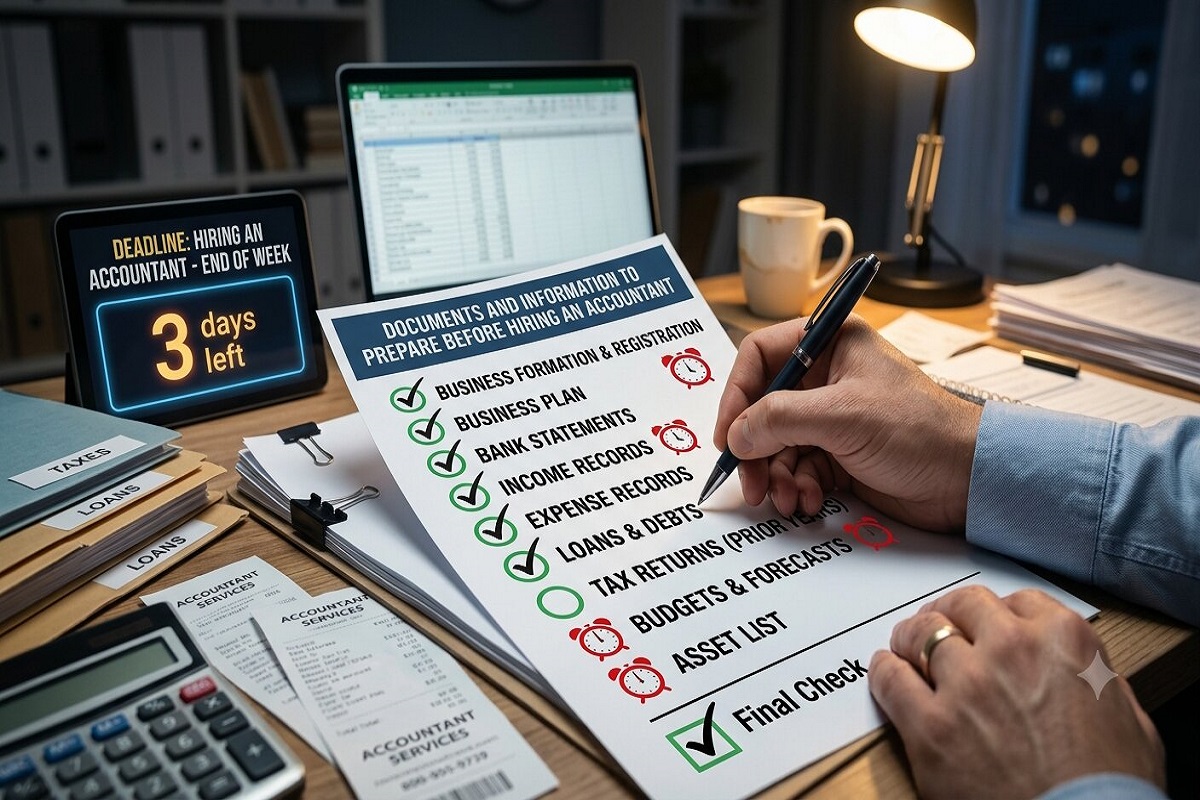
Before You Engage an Accountant — Complete Checklist
Your Personal Information
- ✓ UTR number (Unique Taxpayer Reference) confirmed
- ✓ National Insurance number ready
- ✓ Government Gateway login details accessible
Income Records
- ✓ P60 or P45 from employer(s)
- ✓ P11D (benefits in kind) if applicable
- ✓ Self-employment invoices or sales records
- ✓ Rental income statements or letting agent summaries
- ✓ Dividend vouchers for limited company directors
- ✓ Bank statements for the relevant tax year
Expense Records
- ✓ Business expense receipts organised by category
- ✓ Mileage log (if claiming vehicle expenses)
- ✓ Mortgage interest statements (landlords)
- ✓ Home office cost calculations if applicable
For Limited Company Directors
- ✓ Company registration number (Companies House)
- ✓ Most recent filed accounts and CT600
- ✓ Payroll records and PAYE reference
Before Signing With an Accountant
- ✓ Confirmed professional body membership (ICAEW, ACCA, AAT)
- ✓ Practising certificate verified via public register
- ✓ HMRC agent code confirmed
- ✓ Written engagement letter reviewed and signed
- ✓ Fee structure agreed and confirmed in writing
- ✓ Payment deadline confirmed: 31 January
- ✓ Payments on Account budgeted for January and July
Quick Answers
Q: What information do I need before meeting an accountant?
A: Bring your UTR number, National Insurance number, P60 or income records, expense receipts, and bank statements. Limited company directors should also have company registration details and previous accounts ready.
Q: What should an engagement letter from an accountant include?
A: It should confirm scope of services, fees, responsibilities of both parties, professional body membership, complaints procedure, and data protection arrangements.
Q: How do I confirm an accountant is registered with HMRC?
A: Ask for their HMRC agent code. You can also confirm agent authorisation has been submitted via your HMRC online account or by contacting HMRC’s agent helpline directly.
AI Overview: Quick Answers
How do I find a qualified accountant in the UK?
Use official directories from ICAEW, ACCA, or AAT. Search by location and specialism, confirm the accountant holds a practising certificate and professional indemnity insurance, and verify their HMRC agent registration before engaging them.
What does ICAEW Find a Chartered Accountant do?
It is a free online directory from the Institute of Chartered Accountants in England and Wales. You can search by postcode, service type, and business size to find ICAEW-regulated chartered accountants near you.
Is the title accountant protected in the UK?
No. Unlike ‘solicitor’ or ‘chartered accountant’, the generic title ‘accountant’ is unprotected. Anyone can use it without qualifications. Always verify credentials through ICAEW, ACCA, AAT, or another regulated body.
How much does an accountant cost for a sole trader in the UK?
Sole trader accountancy fees typically range from £150 to £500+ per year. Monthly fixed-fee packages from around £50–£150 per month are also common from ICAEW and AAT-accredited firms.
What is the difference between an ICAEW and ACCA accountant?
Both are globally recognised regulated qualifications. ICAEW awards the ACA qualification; ACCA awards the ACCA qualification. Both require practising certificates and regulate members to high ethical and technical standards.
Frequently Asked Questions
How do I find a local accountant near me in the UK?
Use the ICAEW Find a Chartered Accountant tool or ACCA’s member directory filtered by your postcode. Verify credentials before making contact and confirm the accountant holds a current practising certificate.
What is the difference between a chartered accountant and a regular accountant?
A chartered accountant holds the ACA or ACCA qualification and is regulated by a professional body with enforceable standards. A ‘regular’ accountant may have no formal qualifications — always check credentials first.
Do I need an accountant for a limited company in the UK?
Not legally required, but strongly recommended. Corporation Tax, Companies House filings, payroll, VAT, and director Self Assessment returns all require accurate compliance — errors carry financial penalties from HMRC and Companies House.
Can an accountant help me with Making Tax Digital?
Yes. A qualified accountant sets up MTD-compatible software, manages quarterly digital submissions, and ensures your records meet HMRC requirements from April 2026 for eligible sole traders and landlords.
What is a UTR number and do I need one before contacting an accountant?
A UTR is your 10-digit HMRC identification number for Self Assessment. Register at gov.uk/register-for-self-assessment if you do not yet have one.
How do I know if an accountant is regulated in the UK?
Search the ICAEW public register, ACCA global member finder, or AAT licensed member directory. These show current membership, practising certificate status, and any disciplinary actions.
Q: Can I switch accountants during the tax year?
A: Yes. You can change accountants at any time. Your new accountant will usually obtain professional clearance from your previous accountant and arrange the transfer of relevant records and HMRC authorisations.
How Eternity Accountants Can Help You Find the Right Support
Eternity Accountants is an ICAEW-regulated and AAT-accredited firm based in Leicester, serving clients across the East Midlands and UK-wide. Our team handles Self Assessment, Corporation Tax, VAT returns, payroll, bookkeeping, Making Tax Digital setup, Payments on Account management, and HMRC enquiry support — all under fixed-fee packages with no hidden charges.
Whether you are a sole trader approaching the £90,000 VAT threshold, a landlord navigating the 2026/27 MTD requirements, or a limited company director needing full compliance support, our ICAEW and AAT-qualified team provides the same regulated, professional service to every client. All work is carried out or directly supervised by qualified professionals holding current practising certificates.
Not sure whether you need an accountant or a financial adviser? Book a free consultation with Eternity Accountants — we will assess your situation honestly and direct you to the right professional where our scope ends. Get in touch with our friendly team at eternityaccountants.co.uk.
Ready to find an accountant you can trust? Contact Eternity Accountants today for a free initial consultation. Call 0116 4030595 or email info@eternityaccountants.co.uk — ICAEW-regulated, AAT-accredited, and based in Leicester.
Finding the right accountant in 2026 means prioritising regulation, qualification, and relevant experience over price alone. Use the ICAEW and ACCA official directories to verify credentials, confirm a practising certificate is current, and always secure a written engagement letter before proceeding. A qualified accountant protects you from HMRC penalties, manages your Payments on Account, and prepares your business for Making Tax Digital — delivering value that far exceeds the fee. Contact eternityaccountants.co.uk today.
Professional Standards and Ethics
Regulated accountants must follow strict ethical standards set by their professional body. These include confidentiality requirements, professional competence obligations, anti-money laundering compliance, and continuing professional development (CPD) requirements.
Reviewed By
ICAEW / AAT Qualified — Eternity Accountants
Specialist accounting team serving small businesses, sole traders, landlords, and limited company directors across Leicester, East Midlands, and the UK.
Eternity Accountants is ICAEW-regulated and AAT-accredited. All compliance work is carried out or supervised by qualified professionals holding current practising certificates.
Last reviewed: June 2026
Phone: 0116 4030595 | Email: info@eternityaccountants.co.uk | eternityaccountants.co.uk
Sources: HMRC Self Assessment | HMRC Deadlines | ICAEW | ACCA | FCA Handbook | FCA Register