
Introduction
Bloating is an uncomfortable and often embarrassing digestive issue that plagues millions worldwide. It emerges from diet choices, stress, and indigestion, leading to an accumulation of gas in the digestive tract. Common culprits include high-fiber foods, carbonated drinks, and stress-induced slow digestion. Amid numerous remedies, ginger stands out as a time-honored, scientifically-backed solution. This “Ginger bloating remedy” taps into the root’s natural efficacy to relieve digestive distress and bolster gut health. This article delves into how ginger can serve as a natural path to relief, spotlighting its powerful role in alleviating bloating. Here, you’ll find actionable insights and practical ways to harness ginger’s benefits.
Understanding Ginger as a Potent Bloating Remedy and Digestive Aid
The Science Behind Ginger’s Anti-Bloating Properties
Active Compounds: Gingerols and Shogaols
Ginger is packed with bioactive compounds called gingerols and shogaols. Gingerols are present in raw ginger and deliver potent antioxidant and anti-inflammatory effects, calming the gastrointestinal tract. Shogaols, formed when ginger is dried or cooked, enhance these benefits, supporting digestive comfort by reducing inflammation.
Role in Gastric Emptying and Motility
Ginger stimulates digestive enzymes, significantly speeding up gastric emptying. This prevents prolonged food retention in the stomach, minimizing gas build-up. Its prokinetic effects bolster the rhythmic contractions of the intestinal muscles, optimizing the movement of food and reducing bloating.
Anti-Inflammatory Effects on the Gut
Chronic inflammation in the gut can exacerbate bloating. Ginger helps modulate these inflammatory pathways, minimizing gut irritation and swelling, often responsible for discomfort. By addressing this root cause, ginger provides substantial relief from bloating symptoms.
Common Causes of Bloating and How Ginger Intervenes
Dietary Triggers and Gas Production
Certain foods, like those high in FODMAPs or carbonated drinks, increase gas production. Ginger aids in breaking down food more effectively, reducing fermentation and the resultant gas. It also helps manage the bloating caused by high-fiber diets by soothing the digestive process.
Stress-Related Digestion Issues
The gut-brain axis intricately links stress and digestion. Stress slows motility and heightens gut sensitivity, leading to bloating. Ginger can calm the digestive system, providing a natural way to mitigate stress-induced bloating by restoring digestive harmony.
Underlying Conditions and Ginger’s Supportive Role
Conditions like IBS, SIBO, and food intolerances can result in persistent bloating. While not a cure, ginger serves as a supportive aid in alleviating bloating and discomfort, improving quality of life for sufferers of these conditions.
Different Forms of Ginger for Bloating Relief
Fresh Ginger Root Applications
Fresh ginger can be grated, sliced, or juiced for inclusion in dishes and beverages. Its potency is best preserved when used raw, making it ideal for teas and cooking where subtle spice is desired.
Ginger Tea: Preparation and Benefits
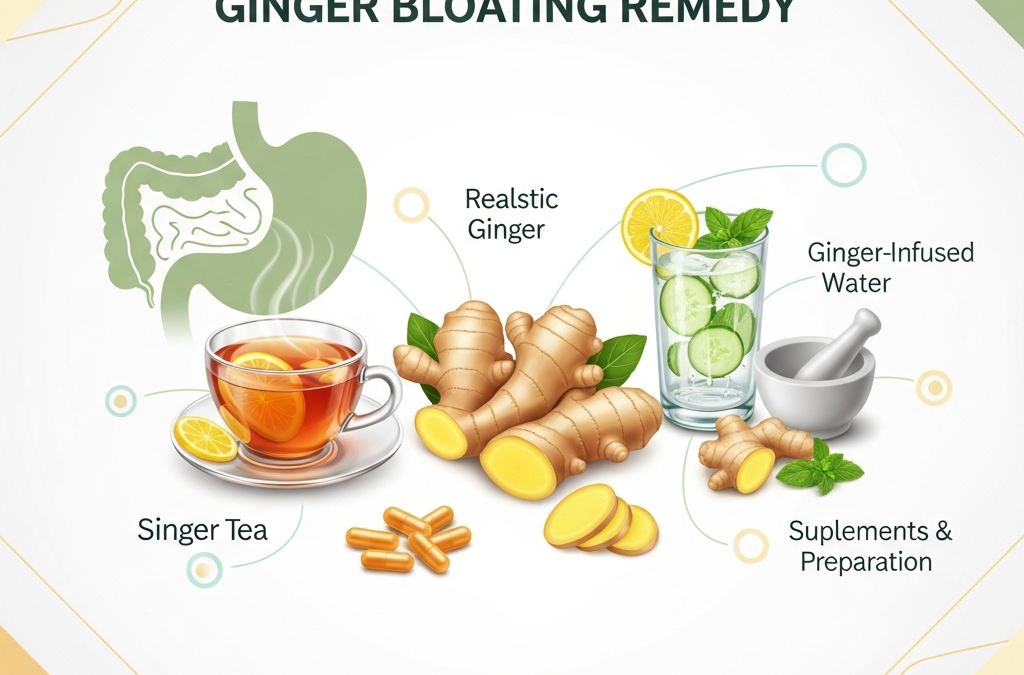
To prepare ginger tea, slice fresh ginger and steep in boiling water for 10 minutes. This drink is particularly beneficial after meals for aiding digestion. Ginger tea bags offer a convenient alternative with similar benefits.
Ginger Supplements and Extracts
Ginger is available in capsules, tinctures, and essential oils. Consideration of dosage is vital, with healthcare professional consultation recommended. High-quality, standardized products ensure consistent relief and maximum health benefits.
Crystallized Ginger and Candied Ginger
Crystallized and candied gingers offer palatable forms, albeit with higher sugar content. They’re suitable for occasional, milder relief, lending a sweet alternative for ginger intake.
Practical Ways to Incorporate Ginger into Your Diet
Simple Ginger Tea Recipe
To brew ginger tea, boil sliced ginger in water, adding lemon or honey to taste. Optimal brewing time is 10-15 minutes. Serve hot for soothing digestive relief.
Adding Ginger to Meals and Smoothies
Incorporate ginger into meals by adding to stir-fries, soups, curries, and marinades. It also pairs well in breakfast smoothies. Store fresh ginger in the fridge to preserve flavor and potency.
Ginger-Infused Water for Daily Hydration
Prepare ginger-infused water by soaking slices in cold water, optionally adding cucumber, mint, or citrus. This refreshing drink ensures consistent digestive support throughout the day.
Optimizing Dosage and Frequency for Best Results
Recommended Daily Intake Guidelines
Moderate daily consumption is generally safe. Fresh ginger, tea, and supplements vary in concentration; consult guidelines and consider individual needs to maximize benefits without adverse effects.
When to Consume Ginger for Digestive Support
For optimal support, consume ginger before or after meals to ease digestion. Ginger tea throughout the day maintains digestive health, enhancing its therapeutic effects.
Gradual Introduction and Monitoring Effects
Start with small amounts and gradually increase ginger intake. Monitor the body’s response to assess tolerance and effectiveness, adjusting as needed to suit dietary requirements.
Combining Ginger with Other Natural Bloating Solutions
Peppermint and Chamomile Synergy
Combining ginger with peppermint and chamomile enhances its effects. Peppermint relaxes gut muscles while chamomile provides calming, anti-inflammatory benefits, together delivering enhanced relief.
Probiotics and Prebiotic Fiber
A healthy gut microbiome is crucial for digestion. Probiotics and prebiotics work synergistically with ginger to boost overall digestive function, sustaining a healthy gut environment.
Hydration and Mindful Eating Practices
Staying hydrated and practicing mindful eating, like thorough chewing and slow eating, prevent bloating and complement ginger’s benefits, promoting overall digestive wellness.
Potential Side Effects and Precautions
Mild Gastrointestinal Discomfort
Some may experience heartburn or stomach upset with large ginger doses. Consuming ginger with meals can minimize these effects, ensuring enjoyment without discomfort.
Interactions with Medications (e.g., blood thinners)
Ginger may interact with certain medications, such as anticoagulants. It’s crucial to seek medical advice before integrating ginger into a routine, especially if on medication.
Pregnancy and Breastfeeding Considerations
During pregnancy, ginger is commonly used for nausea but consult a healthcare provider to determine safe quantities. Caution is also advised during breastfeeding due to sensitivity.
Beyond Bloating: Other Health Benefits of Ginger
Nausea and Motion Sickness Relief
Ginger is highly effective against various types of nausea, including morning sickness and chemotherapy-induced nausea. Its soothing properties make it a go-to solution for motion sickness.
Pain Management and Muscle Soreness
As an analgesic, ginger reduces muscle pain and menstrual cramps. Its anti-inflammatory properties also alleviate symptoms of osteoarthritis, highlighting its multifunctional benefits.
Immune System Support
The antioxidants in ginger bolster the immune system, helping fend off infections. Its natural anti-inflammatory actions contribute to a robust immune response.
Lifestyle Adjustments to Complement Ginger Therapy
Stress Reduction Techniques
Managing stress with meditation, yoga, or deep breathing exercises can amplify ginger’s digestive benefits. Ensure adequate sleep to support holistic well-being alongside ginger therapy.
Regular Physical Activity
Exercise naturally promotes bowel movements and reduces gas buildup. Combined with ginger, it offers powerful support for ongoing digestive health and bloating relief.
Identifying Food Sensitivities
Keeping a food diary or trying an elimination diet can pinpoint specific sensitivities, allowing targeted dietary adjustments for more effective bloating management.
Distinguishing Between Occasional Bloating and Chronic Issues
When to Seek Medical Advice
Persistent or severe bloating, especially with symptoms like unexplained weight loss or blood in stool, requires medical attention. Recognizing these signs ensures timely intervention.
Symptoms Indicating a More Serious Condition
Unexplained changes in bowel habits or severe, worsening bloating suggest an underlying issue. Professional diagnosis is critical for addressing such conditions correctly.
The Importance of Professional Diagnosis
While ginger is powerful, it’s essential to avoid self-diagnosing chronic digestive problems. Professional healthcare evaluation ensures precise treatment and effective management.
Frequently Asked Questions about Ginger and Bloating
How quickly does ginger relieve bloating?
Bloating relief varies, typically occurring within 30 minutes to a few hours, depending on metabolism and how ginger is consumed.
Can I take ginger every day for bloating?
Ginger is safe for daily use in moderate amounts. Understanding daily limits and potential benefits ensures safe, long-term digestive support.
Is raw ginger better than cooked ginger for bloating?
Both raw and cooked ginger benefit digestion. Raw ginger delivers potent gingerols, while cooked forms provide shogaols. Both are effective in reducing bloating.
Does ginger cause gas or make bloating worse?
While rare, high doses of ginger might initially cause mild gas. Generally, ginger alleviates gas and bloating effectively for most individuals.
A Comparative Look at Bloating Remedies
Herbal Remedies vs. OTC Medications
Ginger and other natural remedies like peppermint and fennel contrast with OTC drugs such as simethicone. Herbal remedies provide overall digestive support with fewer side effects.
Efficacy and Safety Profiles
Studies affirm the efficacy and safety of ginger as a bloating remedy, highlighting its benefits across various conditions without major risks.
Long-term vs. Short-term Solutions
Ginger is versatile, offering both acute relief and long-term digestive health benefits. Contrast this with remedies that are primarily designed for short-term application.
Comparison Table (Suggested Inclusion)
Comparison of Bloating Remedies
| Remedy | Mechanism of Action | Onset of Relief | Common Side Effects | Best For | Long-term Use |
|---|---|---|---|---|---|
| Ginger | Anti-inflammatory, Pro-motility | 30-60 mins | Rare mild discomfort | General Bloating | Yes |
| Peppermint Oil | Relaxes gut muscles | 15-30 mins | Heartburn in some cases | Spasms, Gas | Yes |
| Simethicone | Breaks down gas bubbles | Immediate | Very rare | Acute Gas Relief | No |
| Probiotics | Modulates gut flora | Days to weeks | Gas, Bloating | Chronic Digestive Health | Yes |
Expert Insights and Research Highlights
Modern Scientific Studies on Ginger’s Efficacy
Recent studies underline ginger’s role in easing bloating and promoting digestion. Clinical trials highlight its anti-inflammatory and motility-enhancing properties, reaffirming its efficacy.
Endorsements from Dietitians and Gastroenterologists
Health professionals widely support ginger’s digestive benefits. Dietitians and gastroenterologists recommend it for safe and effective bloating relief.
Future Research Directions
Ongoing studies continue to explore ginger’s potential uses, with promising avenues in comprehensive digestive wellness and robust clinical applications.
Conclusion
Ginger’s multifaceted benefits firmly establish it as a natural and effective “Ginger bloating remedy.” Its diverse forms provide flexible applications, delivering significant digestive health improvements. Adopting ginger into daily diets can foster sustained comfort and well-being. These steps promote a healthier, bloat-free digestive system while emphasizing the importance of professional guidance for persistent concerns. Incorporate ginger thoughtfully into your routine for optimal digestive health.